
You typed “Nike shoes” into the search bar and got hit with a wall of choice. Running shoes, court shoes, spikes, cleats, chunky retros, and a toddler pair with a Velcro strap. Somewhere in there is the pair you actually need, and Nike is not going to make finding it obvious.
I’ve spent years watching people buy the wrong Nike shoes for the right reasons. They grab a Pegasus because a friend swears by it, then wear it on a tennis court and roll an ankle. They buy a gorgeous white pair, wear them once in the rain, and never forgive themselves. So this is the guide I wish more people had before they hit “add to cart.” Not a rushed list of “top 10 Nike shoes 2025” with affiliate links stapled to it. A real walk through what Nike shoes makes, who each shoe is for, and the stuff the product pages politely leave out.
Let’s start with the thing almost nobody mentions.
Before you buy any Nike shoes, the sizing problem is real
Here’s the pattern I kept seeing while researching this piece. Across Nike’s performance shoes, especially the ones built for a court, buyers keep saying the same thing: they run small and they run narrow.
On the tennis side, one reviewer bought the GP Challenge Pro for a daughter who normally wears a 6.5 and found it too tight even then. Another wrote, in all caps, that the shoe was “SO TIGHT” despite an average-width foot. Nike’s own product page for that shoe now flat-out recommends ordering half a size up.
Jump to basketball, and it’s the same story with the G.T. Cut 3, one of the most hyped hoop shoes Nike makes. A buyer on Dick’s Sporting Goods loved the traction but warned about a “tiny toe box,” describing it as shaped like a triangle and leaving blisters. Others mentioned the collar rubbing the Achilles until it bruised. Over on the volleyball side, the HyperAce 3 carries the same “fits small, order a half size up” note.
Two takeaways before you spend a rupee or a dollar. First, if you have a wide foot, Nike’s court shoes are the ones to try on in person or buy from somewhere with free returns. Second, the running line behaves differently. The Pegasus, Nike’s most popular runner, fits true to size for most people, so don’t blindly size up everything just because your basketball shoes needed it.
Now, category by category.
Nike running shoes: the daily workhorse, and where it quietly stops
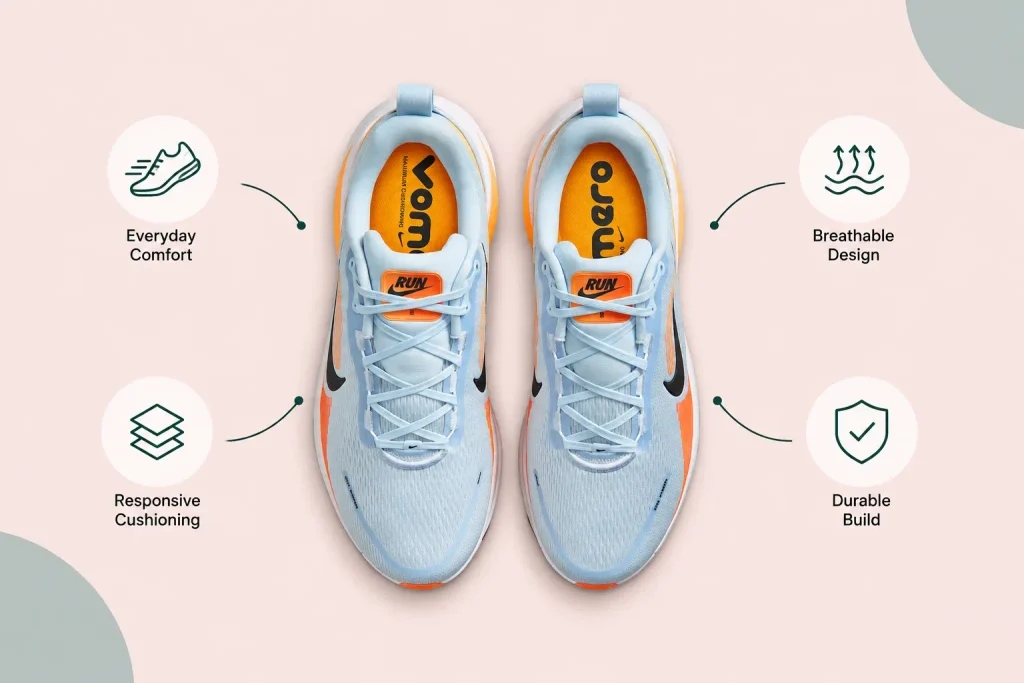
If you asked a hundred people to picture a running shoe, most would describe something close to the Nike Pegasus. It’s been around for over forty years, and the current Pegasus 41 is the shoe most folks mean when they say Nike running shoes.
What’s it actually good at? Easy, everyday miles. The 41 runs on Nike’s ReactX foam with two Air Zoom units, and Nike shoes says the newer foam returns about 13% more energy than the old React. Reviewers who log serious mileage tend to land in the same place: comfortable, breathable, durable, and a little boring. One shoe-testing site scored it a 63 out of 100 and ranked it 19th of 22 daily trainers, calling it a shoe that “gets the job done” for heel-strikers and slow runs without wowing anyone.
That’s not an insult. It’s the point. Doctors of Running pegged it as a straightforward neutral trainer for people who just want to rack up miles, true to size with a normal width. If you’re a beginner, a gym-and-treadmill person, or someone who wants one reliable pair for walking and the occasional jog, the Pegasus earns its reputation.
Where does it stop? Racing. Reviewers are blunt that the Pegasus 41 is heavier than past versions and its cushioning feels dated next to foam-heavy rivals. One tester said he’d reach for a Hoka Clifton before running a marathon in it. So if you’re chasing a personal best, Nike shoes wants you one shelf up, on a carbon-plated Vaporfly or Alphafly, the “super shoes” built for race day and priced like it. And if your knees just want to be left alone on long runs, the Invincible line is Nike’s max-cushion pillow.
A quick way to think about Nike running shoes:
- Pegasus for daily training, walking, and gym work. The safe default.
- Vomero or Invincible when you want more cushion under your heel.
- Vaporfly or Alphafly only if you race and want the plate. Overkill for casual runners, and your wallet will notice.
- Pegasus Plus or Pegasus Premium if you like the name but want a lighter, springier, or more style-forward take.
One more note: because prices on Nike shoes swing hard, the Pegasus lists around $140, but older colorways get discounted constantly. Patience saves money here.
Nike basketball shoes: traction wins games, toe boxes lose them
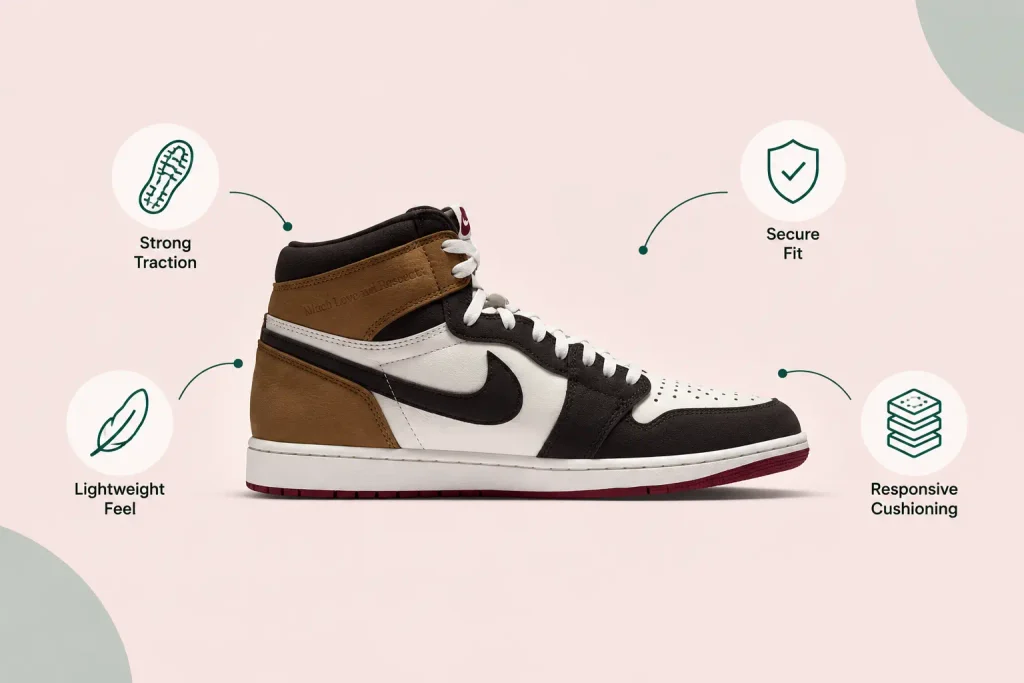
Basketball is where Nike shoes still feel like Nike. The signature lines, the Kobe reissues, the tech. But hoopers care about two things above all: does the shoe grip, and does it hold your foot down when you cut. Nike nails the first and occasionally fumbles the second.
The G.T. Cut 3 is the guard’s shoe of the moment. It uses bouncy ZoomX foam and multicourt traction that reviewers describe as elite for stop-and-go moves and stepbacks. On retailer sites it sits around 4.3 stars from over a hundred buyers. But remember that toe box. If you have a normal-to-wide foot, this is the shoe to size carefully, and the Achilles rub is common enough that I’d break them in slowly.
For quick guards who want court feel over cushion, the Kobe 8 Protro keeps getting praised for traction and a low-to-the-ground ride. The Sabrina 2, Sabrina Ionescu’s signature shoe, plays like a modern Kobe: light, grippy herringbone traction, great for fast guards. The catch reviewers flag is durability. The materials feel cheap and wear faster than you’d like, though performance holds up while they last.
Play in the paint? Bigs and above-the-rim players want impact protection, and that’s the G.T. Hustle 3, a plusher, more cushioned setup. On a budget, the Precision line delivers most of what a rec-league guard needs for well under the flagship prices.
The honest summary for Nike basketball shoes:
- Guards who live on quickness: G.T. Cut 3 or Kobe 8 Protro.
- Lightweight, aggressive guards: Sabrina 2, if you accept it won’t last forever.
- Bigs and high flyers: G.T. Hustle 3 for the cushion.
- Anyone on a budget: Precision, and don’t feel bad about it.
Nike golf shoes: let the weather make the call
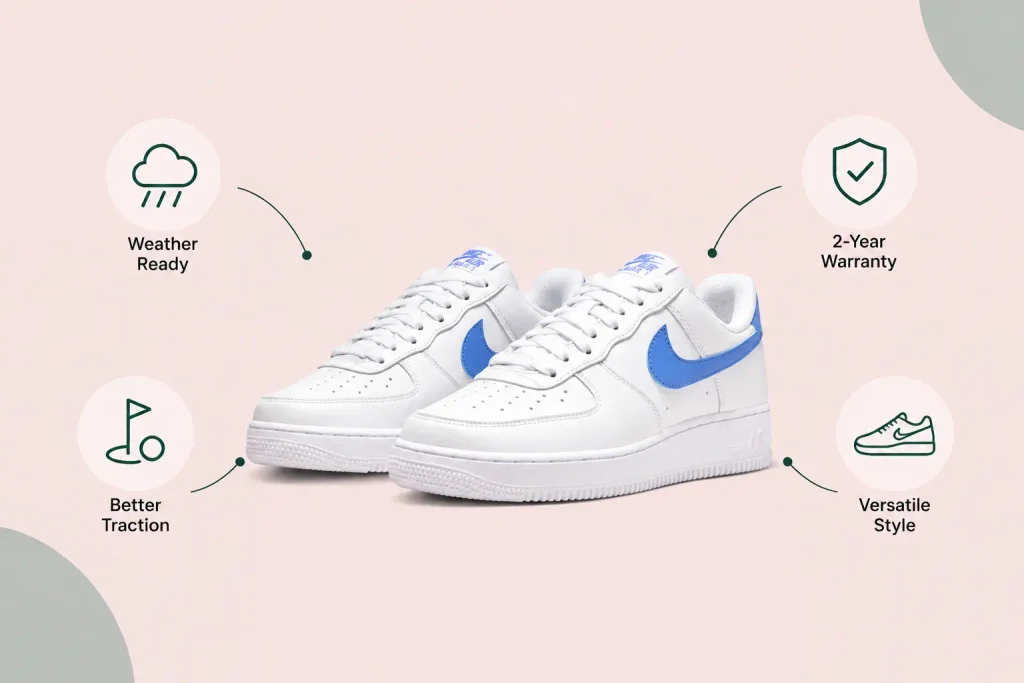
Golf is the category where I’d tell you to ignore the marketing and check the forecast first. Nike golf shoes split cleanly by how much you care about staying dry.
If you play through wind and rain, Nike’s answer is the Air Zoom Infinity Tour line, now in a GORE-TEX version that reviewers treat as the go-to waterproof pick. It’s the shoe with our credibility too. Brooks Koepka helped shape an earlier Infinity Tour, and here’s a detail that tells you Nike shoes listens: golfers complained the original ran too narrow, so Nike widened the later version and added volume. That’s rare candour built into a product’s history, and it matters if your feet aren’t slim.
For golfers who prioritize a stable base through the swing over rain protection, the Victory Pro line focuses on stability and swing speed at a friendlier price, often around $130 versus $200-plus for the waterproof flagship. And if you want a shoe that looks as good at the clubhouse bar as on the first tee, the spikeless Air Max 90 G and the Air Jordan ADG bring street style to the course without falling apart on grass.
A few things the golf product pages won’t stress:
- Waterproof warranties are worth using. Nike shoes backs some models with a two-year waterproof warranty. Keep the receipt.
- Spiked versus spikeless is a lifestyle choice. Spiked grips better in the wet. Spikeless walks nicer off the course and drives to dinner without clacking.
- Tour players wear these for a reason. Rory McIlroy and Koepka in Nike golf shoes isn’t just a logo deal; the traction and stability hold up under real torque.
Nike tennis shoes: stability and speed pull in opposite directions
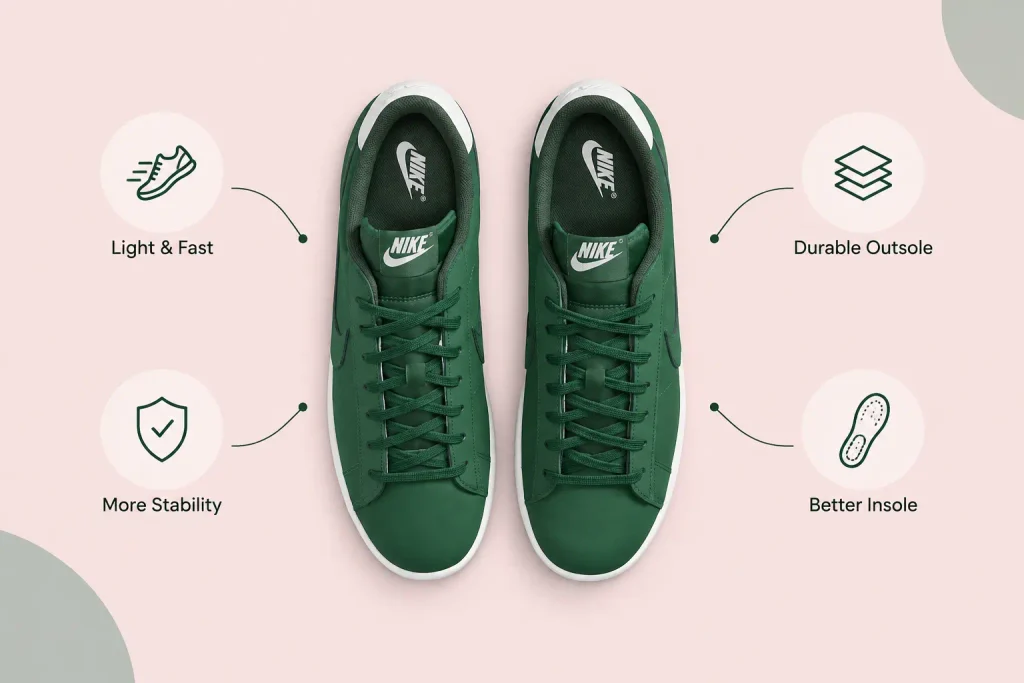
Tennis exposed the clearest fork in Nike’s whole lineup, and one reviewer explained it better than any spec sheet could.
Nike tennis shoes basically come in two flavors. The Zoom Vapor line is fast, flexible, and low, built for players who fly around the court. The GP Challenge Pro is the stable, planted, do-it-all option with a plastic midfoot plate, a wide base, and a heel Air Zoom unit for support.
A hard-court player named Kasey wrote a review I keep thinking about. She called the flexible Zoom shoes a problem for her game: no brakes when she sprinted and changed direction, a sole that wore out in about two months, and enough instability that they triggered plantar fasciitis. She even claimed a competitor broke a foot chasing a short ball in them. Then she switched to the GP Challenge Pro and found the balance she wanted: stability, control, and a tread that lasted her six months of frequent play. Her one gripe? The stock insole felt cheap enough that she swapped it for a gel replacement to get to a five-star shoe.
That’s the honest read on Nike tennis shoes. The Vapor Speed shoes suit light, fast, aggressive players who replace shoes often and don’t need much support. The GP Challenge Pro suits the rest of us who play a few times a week, want our ankles protected, and don’t want to buy new shoes every eight weeks. Whichever you pick, remember the sizing note: it fits small, so try before you commit, and consider a better insole from day one.
The specialists: volleyball and wrestling shoes
Two categories get overlooked because fewer people search for them, but Nike shoes takes both seriously.
For volleyball, the HyperAce 3 is the current pick, priced around $125 to $135. It’s a lightweight indoor shoe with a forefoot Air Zoom unit, a fresh multidirectional outsole for grip on hardwood, and a plush collar to steady your ankle on landings. Parents reviewing it for kids playing 10-plus hours a week say it holds up well and stays comfortable through long practices. The same sizing caveat applies: order a half size up. If you play volleyball in running shoes, stop; the lateral movement and hard landings need a shoe built for the court, and Nike volleyball shoes are made for exactly that.
Wrestling is Nike Brands‘ quiet legacy category. The brand built its reputation on mats with lines like the Inflict, Freek, and Tawa, shoes prized for their split-sole flexibility and locked-in feel. Availability of Nike wrestling shoes has fluctuated over the years, and specific models come and go, so if you find a pair in your size that fits your ankle and gives you a good mat feel, don’t overthink it. Fit and grip matter far more than the model name on a wrestling shoe.
Nike shoes for men, women, and kids (including the little ones)
Most of Nike’s performance shoes come in both men’s and women’s versions, and the differences go beyond color. Women’s models often use a narrower heel and a different last shaped for a typically narrower foot, and some shoes, like the Sabrina line, started as women’s basketball signatures but get worn across the board. When you’re comparing Nike shoes for men and Nike shoes for women, always check whether the sizing is listed in men’s, women’s, or unisex numbers, because a “size 8” is not the same across those systems. This trips people up constantly with online orders.
Nike shoes for kids follow a clean logic once you learn it. The labels break down by age and size band:
- TD (toddler) for the smallest feet, usually with a strap for easy on-and-off. If you’re buying Nike toddler shoes, prioritize a wide opening and a Velcro closure over looks. A toddler cannot tie laces, and you’ll be putting these on a wriggling child several times a day.
- PS (preschool) for little kids who are running everywhere but still can’t manage laces reliably.
- GS (grade school) for older kids, and here’s the money-saving secret: GS sizes often match smaller adult sizes but cost less. If you wear a men’s 6 or a women’s 7.5, check the GS versions of shoes like the Pegasus before paying the full adult price.
For kids specifically, durability and easy cleaning beat cushioning tech. Children outgrow shoes long before they wear out the foam, so you’re really buying for scuff resistance and a fastening system that survives daily chaos.
Black or white? The color choice that decides upkeep
People agonize over color, then pick based on a photo. Let me make it practical, because black Nike shoes and white Nike shoes ask completely different things of you.
White Nike shoes look crisp, go with everything, and photograph beautifully. They also show every scuff, grass stain, and rain splash within a week. If you buy white, you’re signing up for maintenance: a soft brush, a cleaning solution, and the discipline to wipe them after wear. On a golf course or a clay-adjacent tennis court, white shoes age fast.
Black Nike shoes hide dirt, survive bad weather, and forgive a lazy owner. The trade-off is heat (dark uppers soak up sun) and a slightly less “fresh” look next to a box-white pair. For daily wear, commuting, or anyone who won’t baby their shoes, black is the low-stress answer.
My rule of thumb: buy white if the shoe is mostly for clean indoor courts, style, or occasions where you’ll keep them nice. Buy black or a darker colorway for anything that meets weather, dirt, or a packed weekly schedule. And if you genuinely can’t choose, the grey and “photon dust” colorways Nike shoes loves right now split the difference and hide wear better than pure white.
A faster way to choose your Nike shoes
If you skimmed straight to here, no judgment. This is the shortcut.
Ask yourself what you’ll do in them more than twice a week, and buy for that:
- Daily miles, walking, gym: Nike Pegasus. True to size.
- Basketball, guard play: G.T. Cut 3 or Kobe 8 Protro. Mind the toe box.
- Basketball, playing bigger: G.T. Hustle 3.
- Golf in wet weather: Air Zoom Infinity Tour GORE-TEX.
- Golf, stability, and value: Victory Pro.
- Tennis, stability, and durability: GP Challenge Pro, plus a better insole.
- Tennis, pure speed: Zoom Vapor, if you don’t mind replacing them often.
- Volleyball: HyperAce 3. Size up a half.
- Everyday style that survives real life: a black or grey Air Max or a retro silhouette.
| What you’ll do most | Nike pick | Note |
| Daily miles, walking, gym | Pegasus | True to size |
| Basketball, guard play | G.T. Cut 3 or Kobe 8 Protro | Mind the toe box |
| Basketball, playing bigger | G.T. Hustle 3 | Built for bigger players |
| Golf in wet weather | Air Zoom Infinity Tour GORE-TEX | Waterproof upper |
| Golf on a budget | Victory Pro | Stability and value |
| Tennis, durability | GP Challenge Pro | Add a better insole |
| Tennis, pure speed | Zoom Vapor | Expect to replace them often |
| Volleyball | HyperAce 3 | Size up a half |
| Everyday style | Black or grey Air Max or a retro silhouette | Hides wear and dirt |
Two habits will save you money and regret. Buy from a retailer with free returns so sizing surprises don’t cost you, and wait for the colorway you like to hit a sale, because on Nike shoes it almost always does.
The bottom line on buying Nike shoes
Nike makes a shoe for nearly everything you can do on your feet, and that range is exactly why people buy the wrong one. The fix is simple: choose for the activity you’ll repeat, not the shoe that looks best in the photo or the one your friend loves for a different sport.
Get the sizing right, especially on court shoes, where real buyers keep warning that they run small and narrow. Match the shoe to your actual use, whether that’s easy miles in a Pegasus, stop-and-go grip in a G.T. Cut, or dry feet in a GORE-TEX golf shoe. Pick a color you’ll be willing to maintain. Do that, and Nike shoes stop being an overwhelming wall of choices and start being what they’re supposed to be: the right tool for the thing you love doing.
Now go find your pair, and maybe wait for the sale.
FAQs
Q. Do Nike shoes run small or true to size?
A. It depends on the category. Nike running shoes like the Pegasus fit true to size for most people. Nike’s court shoes are the problem children: the GP Challenge Pro tennis shoe and the HyperAce 3 volleyball shoe both officially recommend ordering a half size up, and the G.T. Cut 3 basketball shoe draws frequent complaints about a narrow toe box. If you have wide feet, buy Nike performance shoes from somewhere with free returns.
Q. Which Nike shoes are best for everyday walking?
A. The Nike Pegasus is the most reliable all-rounder for walking and light exercise, thanks to its cushioned ReactX foam and durable build. If you want more softness underfoot, look at the Vomero or Invincible. For pure casual wear, an Air Max model gives you the cushioning with more street style.
Q. Are expensive Nike shoes worth it?
A. For a specific sport, often yes. A waterproof golf shoe or a high-traction basketball shoe does something a cheap pair can’t. But for daily wear or beginners, the flagship price rarely pays off. A discounted Pegasus or a budget Precision basketball shoes cover most people’s needs. Nike discounts older colorways heavily, so patience beats paying full price.
Q. What’s the difference between men’s and women’s Nike shoes?
A. Beyond color, women’s Nike shoes typically use a narrower heel and a last shaped for a narrower foot. Sizing numbers differ between men’s, women’s, and unisex systems, so a men’s 8 and a women’s 8 are not the same shoe length. Always confirm which system a listing uses before ordering online.
Q. How do I keep white Nike shoes clean?
A. Wipe them after every wear, and clean them with a soft brush and a gentle shoe cleaner rather than tossing them in a washing machine, which breaks down glue and foam. Treat the upper with a protectant spray when they’re new. If you know you won’t keep up with that routine, a black or grey pair will look better for longer with almost no effort.