
Chanel earrings are one of the few quiet luxury accessories where the $400 pair and the $10,000 pair are, weirdly, chasing the exact same design idea. You go in looking for a simple answer, “What do they cost, which pair should I get?” and you come out an hour later with fourteen browser tabs open, comparing a 1990s gold turnlock clip-on to a 2025 crystal stud, wondering why your heart rate just went up over an earring.
That’s the pull of this brand. Chanel earrings aren’t just accessories. They’re small, wearable pieces of a design language that’s been evolving since Coco Chanel first put her initials on a piece of jewelry, and every version since, from Karl Lagerfeld’s maximalist eras to the quieter, cleaner pieces coming out now, carries a bit of that history on your ear.
This guide is built to actually answer the questions people type into Google at 11pm while half-shopping, half-daydreaming: what the different styles are, what things really cost (new and resale), which ones hold up day to day, and what actual owners tend to say once the packaging comes off.
What Makes Chanel Earrings Different From Other Designer Jewelry
Most luxury jewelry brands lean on gemstones or metal weight to signal value. Chanel earrings do something else, they lean on instant recognizability. The interlocking double-C, first used by Coco Chanel in the 1920s, is arguably the most photographed logo in fashion history, and it shows up on earrings in more forms than almost any other Chanel accessory: enamel, resin, pearl, crystal, gold-tone metal, and increasingly, fine jewelry versions in actual 18k gold.
That range is part of why searches for Chanel earrings cover such different price points. A pair of vintage Chanel CC clip-on earrings from the 1990s can trade hands for a few hundred dollars on the resale market, while a Coco Crush hoop in solid gold sits well into four figures. Same house, wildly different products, wildly different buyers.
The Main Styles of Chanel Earrings You’ll Actually Encounter
If you spend any real time browsing Chanel earrings, on the brand’s own site, at consignment shops, or on resale platforms, you’ll notice the catalog sorts itself into a handful of recurring categories.
Chanel CC Stud Earrings
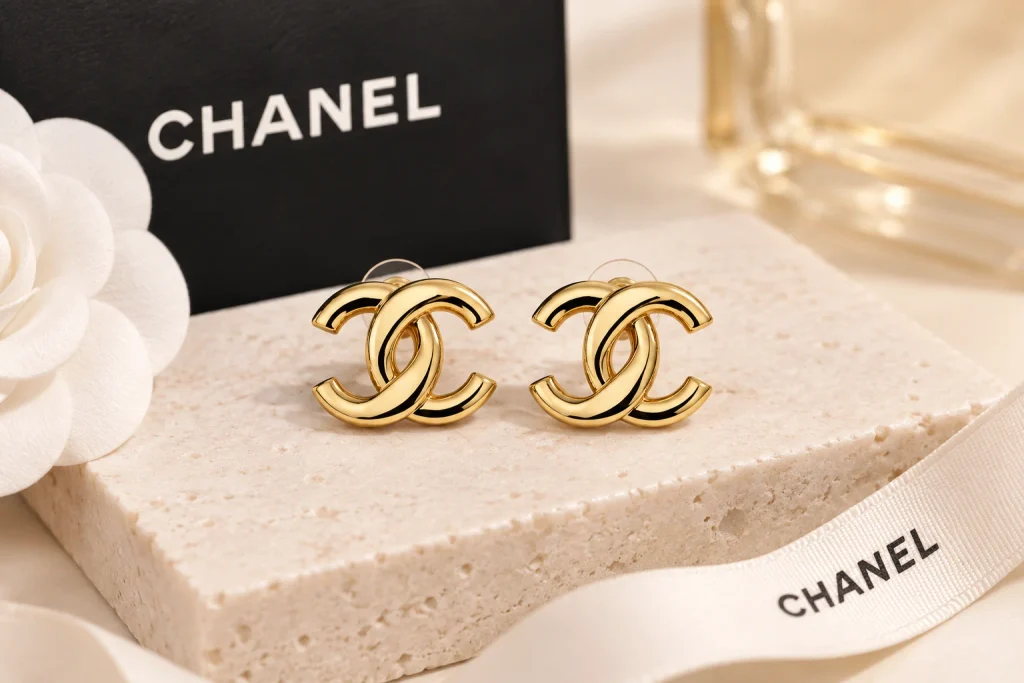
This is the entry point for most people, and for good reason. Chanel CC earrings in stud form are compact, easy to wear daily, and immediately recognizable without shouting for attention. They show up in gold-tone metal, black resin, crystal-pavé, and seasonal color combinations, a green enamel avocado-shaped CC stud, a soft pink resin clover, and a classic bicolor black-and-white pair.
Chanel Pearl Earrings
Pearl has been a Chanel signature since Coco herself layered ropes of faux pearls over simple black dresses. Chanel pearl earrings usually pair a faux pearl drop or stud with a CC logo accent, and they read as slightly more formal than a plain metal stud, the kind of pair people reach for with an evening look or a wedding guest outfit.
Chanel Hoop Earrings
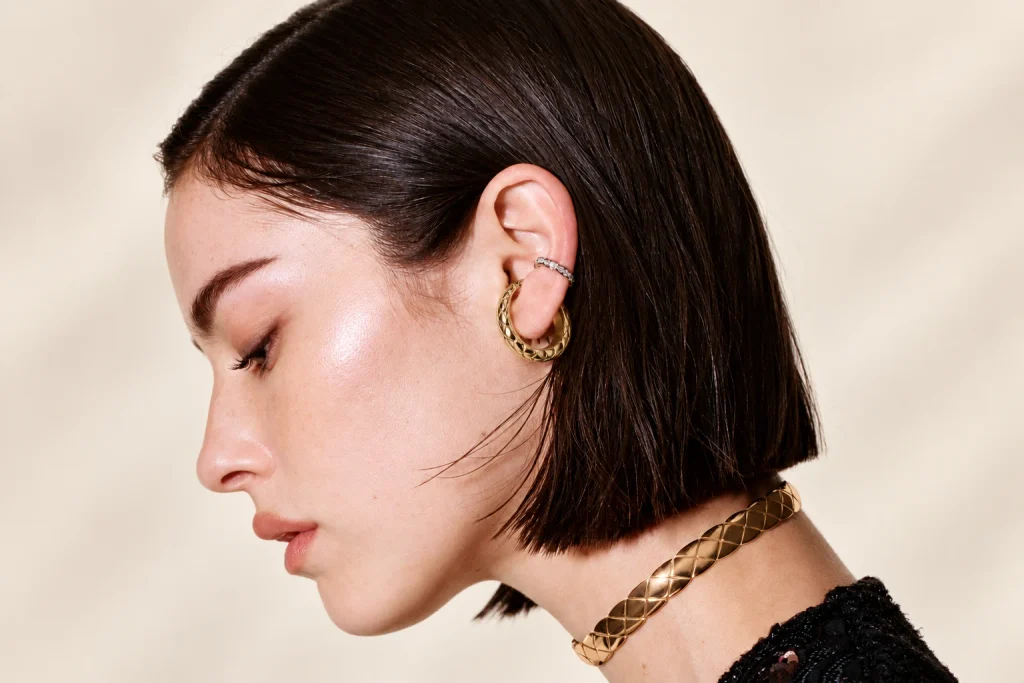
Hoops have become a bigger part of the current Chanel earring lineup, ranging from small crystal-embellished huggies (often marketed as Chanel women’s crystal hoop earrings) to the more architectural 18k gold Coco Crush mini hoop, which quilts the gold surface in Chanel’s signature diamond pattern.
Chanel Dangle and Drop Earrings
Chanel drop earrings and dangle styles are where the brand gets more playful, chain-and-CC combinations, medallion drops, and layered pearl-and-leather pieces from past collections. These tend to be the statement pairs, the ones people buy specifically because a single photo of them stopped the scroll.
Chanel Diamond and Fine Jewelry Earrings
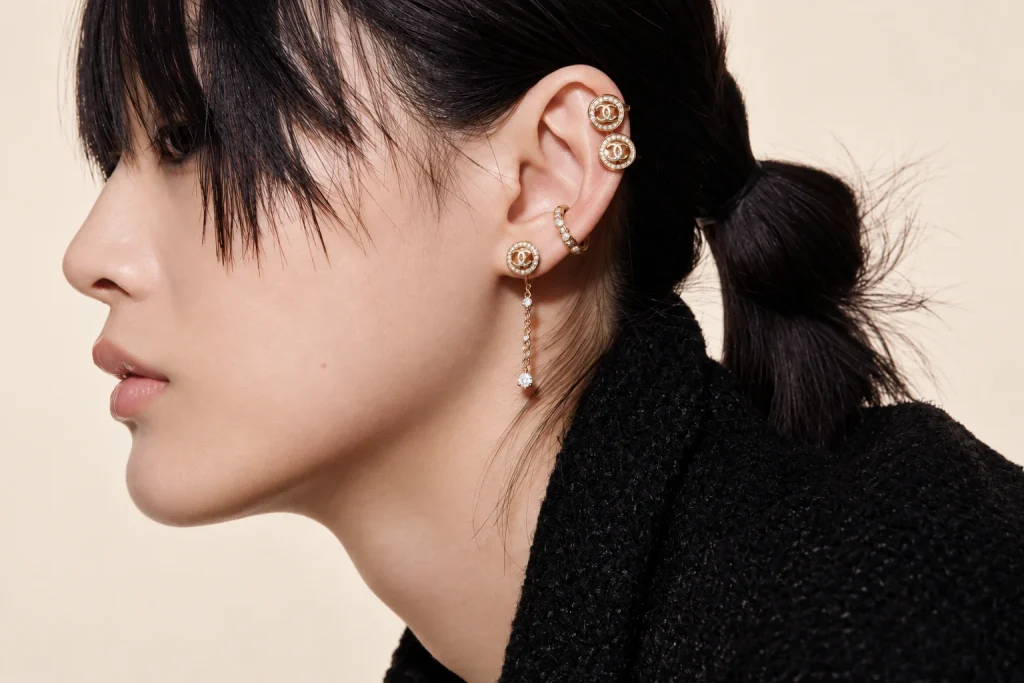
At the top of the range sit genuine fine jewelry pieces, 18k gold Chanel diamond earrings, Coco Crush designs, and Comète collection pieces with reversible sapphire or diamond settings. These aren’t costume jewelry; they’re priced and positioned closer to a Cartier or Van Cleef piece than to a typical accessory.
Vintage Chanel Earrings
A huge share of the ongoing conversation around Chanel earrings happens in the vintage and pre-owned space. Vintage Chanel earrings from the Lagerfeld decades, the 1980s through early 2000s, have their own devoted following, partly because that era produced some of the boldest, most sculptural designs the house ever made, and partly because vintage pricing can undercut current retail by a wide margin for a piece with more character.
How Much Do Chanel Earrings Actually Cost?
This is the question most people are really trying to answer, and the honest response is, “It depends enormously on which category you’re in.”
| Category | Typical Price Range | Notes |
| Current CC stud earrings (metal/resin) | $500 – $900 | Most common entry point; seasonal colors vary |
| Chanel pearl earrings | $550 – $1,100 | Price rises with crystal detailing and glass pearl accents |
| Chanel hoop earrings (costume) | $600 – $1,300 | Crystal, resin, and quilted metal styles |
| Coco Crush 18k gold hoops/studs | $3,000 – $4,500+ | Fine jewelry, priced by gold weight and diamond inclusions |
| Vintage CC clip-ons (resale) | $350 – $900 | Condition and rarity heavily affect price |
| Comète/diamond fine jewelry | $6,000 – $15,000+ | High-fine jewelry, diamonds, limited production |
A quick look at current resale listings backs this range up. On platforms like The RealReal, current-season CC drop earrings list around $725, while an 18K Coco Crush single mini hoop earring runs roughly $1,295 after a markdown from a nearly $2,000 retail price. On the vintage side, consignment sellers on 1stDibs regularly list Chanel CC earrings from the 2000s and earlier between roughly $530 and $900 depending on condition and materials, with rarer Métiers d’Art or Gripoix glass pieces climbing well past that.
If you’re shopping new through Chanel boutiques, expect list prices to sit at the top end of these ranges, since resale and consignment pricing already factors in some depreciation, except for genuinely rare vintage pieces, which can actually appreciate.
What People Are Actually Saying About Owning Them
Marketing copy will tell you every pair of Chanel earrings is a flawless investment piece. Real owners, in forums, resale-app comment sections, and jewelry communities, tend to have a more textured take, and it’s worth knowing before you buy.
On comfort: A recurring theme in community discussions is that a lot of classic Chanel CC earrings, especially vintage ones, are clip-ons rather than pierced studs. That’s a deliberate, old-world design choice, but plenty of buyers who assume “stud” means “post back” are surprised when a $600 pair arrives with a clip mechanism instead. If you have pierced ears and want to wear them daily, checking the listing for “clip,” “post,” or “pierced” before buying saves a lot of disappointment.
On weight and wear: Larger CC medallion or dangle styles get mentioned often for being heavier than expected, particularly for people with more sensitive earlobes. Smaller stud styles are consistently described as close to weightless once you forget you’re wearing them.
On authentication: Because Chanel earrings are among the most counterfeited accessories in the resale market, community advice repeatedly circles back to the same core checks, stamped hallmarks, the quality of the CC engraving, box and authenticity card provenance, and buying from platforms that offer an authentication guarantee. Reputable resale sites explicitly market this as a selling point, and it’s a genuinely useful filter when a listing price looks unusually low for what it claims to be.
On resale value: Vintage and discontinued Chanel earrings, especially Gripoix glass pieces and early Lagerfeld-era designs, are frequently cited as holding value better than current-season costume pieces, which depreciate faster once a new collection replaces them in stores.
Chanel Earrings Through the Decades
Part of what makes shopping for Chanel earrings so absorbing is that the brand’s approach to jewelry has genuinely shifted era by era, and knowing the rough timeline helps explain why two “vintage” pairs can look nothing alike.
1920s–1930s: Coco Chanel herself popularized costume jewelry as a legitimate style statement rather than a cheaper substitute for fine jewelry, mixing faux pearls and gilt metal with real gemstones to deliberately blur the line between the two.
1954–1971 (post-war revival): After reopening her house, Chanel continued the mix of real and costume pieces, working with the Maison Gripoix atelier on the poured-glass jewelry that’s still considered some of the most artisanal work the house has produced.
1983–2019 (the Lagerfeld era): This is where most of what people now call “vintage Chanel earrings” comes from. Karl Lagerfeld pushed the CC logo into a genuine motif, oversized medallions, chain-and-CC drops, and bold seasonal color statements that leaned into 1980s and 1990s maximalism. Collectors specifically hunt for pieces from this stretch because the designs are considered more expressive than a lot of what followed.
2019–present (Virginie Viard and beyond): Recent collections have leaned toward smaller, cleaner silhouettes, simple studs, subtler hoops, and an expanded fine jewelry line including Coco Crush and updated Comète pieces. It’s a more restrained aesthetic overall, though seasonal collections still bring in playful shapes like flowers, hearts, and fruit motifs.
Knowing roughly which era a pair comes from is genuinely useful when shopping resale, since it helps set realistic price expectations and tells you what kind of design language you’re actually buying into.
How to Style Chanel Earrings Without Overdoing It
A common mistake with any statement-logo jewelry is treating it as the only thing that needs to do the talking, which can tip an outfit from polished into costume-y fast. A few practical notes that come up repeatedly among people who wear Chanel earrings regularly:
- Let the earrings anchor a simple outfit rather than compete with a busy one. A quilted CC stud reads best against a plain neckline or a simple crew-neck sweater.
- Skip the matching necklace unless you want maximum branding. Pairing CC earrings with a single delicate chain, rather than a matching CC necklace, tends to look more considered.
- Consider your hair. Dangle and drop styles get lost under hair worn down; if you’re investing in a statement pair, a half-up style or low bun shows them off properly.
- Mix eras, not just metals. A modern silver hoop with a vintage gold CC stud in the other ear has become a small styling trend in its own right, particularly among people building a personal jewelry collection rather than buying “matching sets.”
Gold Chanel Earrings vs. Silver Chanel Earrings: Which Should You Choose?
This split shows up constantly in how people search; “gold Chanel earrings” and “silver Chanel earrings” both pull enormous search interest, and the honest answer is that it’s mostly a personal styling decision rather than a quality one.
Gold-tone Chanel earrings tend to read warmer and more classic, and they’re the more common finish across both vintage and current collections. Silver-tone and ruthenium finishes have a cooler, more modern edge, and they’ve become especially popular in recent Chanel stud earrings collections aimed at a slightly younger customer. Neither finish is objectively “better made”; the deciding factor should be what sits better against your skin tone and the rest of your jewelry collection, since mixing metals badly is a much more common regret than picking the “wrong” one outright.
Chanel Earrings for Different Occasions
Everyday wear: Small CC stud earrings or simple pearl studs are the most practical choice. light, low-profile, and hard to snag on scarves or hair.
Work and professional settings: A subtle metal CC stud or a small hoop reads polished without looking like a statement piece, which is exactly the balance most workplaces reward.
Evening and events: This is where dangle and drop styles, pearl-and-crystal combinations, or a Comète diamond piece earn their price tag, they photograph well and hold their own against evening makeup and hair.
Gifting: Heart-shaped CC studs and pastel resin pieces are consistently among the most gifted Chanel earrings, likely because they read as thoughtful without requiring the recipient to commit to a bold style statement.
New vs. Vintage: Which Is the Smarter Buy?
New Chanel earrings, bought through the boutique or an authorized retailer, come with the reassurance of guaranteed authenticity, current warranty support, and often the option to have a piece resized or repaired through Chanel directly. You’re also paying full retail, and current-season costume pieces are the most likely to lose resale value once the next collection replaces them.
Vintage Chanel earrings, sourced through reputable consignment or auction platforms, tend to offer more design personality per dollar, and certain eras, particularly Lagerfeld’s 1990s output, are increasingly treated as collectibles rather than simply “used.” The tradeoff is that authentication becomes your responsibility, and clip-on backs are far more common than they are on new pieces.
Neither path is universally “correct.” Someone buying their first pair of Chanel earrings to wear to the office every day is usually better served by a current, warrantied stud. Someone building a jewelry collection with an eye toward rarity and history often ends up gravitating toward vintage.
How to Spot a Good Pair (Buyer’s Checklist)
- Confirm whether the earring is a clip-on or pierced post, this single detail derails more purchases than any other
- Ask for close-up photos of the CC logo engraving and the back stamp before buying resale
- Buy from platforms offering an authentication guarantee when purchasing pre-owned pieces
- Check whether the original box, dust bag, and authenticity card are included, since this affects both trust and future resale value
- Compare weight expectations against your ear sensitivity, especially for larger dangle or medallion styles
- For fine jewelry pieces (Coco Crush, Comète, and diamond styles), request the gold hallmark and any accompanying certification
Final Thoughts
Chanel earrings occupy a strange, appealing middle ground in the luxury world, small enough to feel attainable and iconic enough to carry real weight. Whether you’re drawn to a $400 resin CC stud or a five-figure diamond Comète piece, the underlying appeal is the same: a tiny, wearable piece of a design history that’s been shaping fashion for a century.
The smartest approach isn’t chasing the “best” pair in the abstract. It’s matching the style, finish, and price point to how you’ll actually wear it—daily stud, occasional statement piece, or considered collectible—and buying from a source that can back up what it’s selling.
Pricing referenced above reflects current listings on resale and consignment platforms, including The RealReal and 1stDibs, alongside general observations from jewelry and fashion communities. Prices fluctuate by season, condition, and platform, so treat the ranges here as a guide rather than a fixed quote.
Frequently Asked Questions (FAQs)
Q. Are Chanel earrings worth the price?
Ans. For many buyers, yes, the brand recognition, resale demand, and design history hold up over time, especially for classic CC styles and vintage pieces. Whether it’s “worth it” for you depends on how often you’ll wear the piece and whether you value it as an investment or simply as an accessory.
Q. How can I tell if Chanel CC earrings are authentic?
Ans. Check the back stamp, the precision of the CC logo (authentic pieces have crisp, evenly weighted lettering), and buy from sellers or platforms offering an authentication guarantee. The original box, dust bag, and paperwork also support authenticity, though their absence doesn’t automatically mean a piece is fake.
Q. Why are so many Chanel earrings clip-ons instead of pierced?
Ans. Clip-on styles were the historical default for costume jewelry houses, including Chanel, and the brand has continued offering them alongside pierced options, particularly on vintage and classic CC designs. Always check the listing description before buying if a postback matters to you.
Q. Do Chanel earrings hold their value?
Ans. It varies widely. Discontinued and vintage pieces, especially rarer materials like Gripoix glass, tend to hold or even increase in value. Current-season costume styles usually depreciate somewhat once newer collections are released.
Q. What’s the difference between Chanel costume earrings and Chanel fine jewelry earrings?
Ans. Costume pieces use metal, resin, glass, and crystal and sit in the low hundreds to low thousands. Fine jewelry pieces, like Coco Crush and Comète, use 18k gold and genuine gemstones, with prices starting near $2,000 and climbing well into five figures for diamond-set designs.

1 comment
[…] no casual shopper saw coming. Feathers were everywhere on the winter fashion 2026 collections, from Chanel and Prada to Loewe, Louis Vuitton, and The Row. Not the campy, costume-y kind. Designers used soft […]