
Quick answer: The 10 types of necklaces every woman should own are a pendant, a dainty chain, a choker, a pearl strand, a lariat, a tennis necklace, a statement piece, a station necklace, a locket and a layered set. Each one also comes in lengths that run from choker to rope.
A good necklace collection is smaller than you think. Ten types of necklaces cover almost every outfit you own, from a Monday crew neck to a strapless wedding-guest dress. The trick is buying them in the right order and the right length, because a 16-inch chain and a 20-inch chain look like two different pieces on the same neckline.
Below you’ll find each type with the same four notes: what it is, where it sits, what it pairs with and how to wear it on any budget. You’ll also get a length chart in inches, a neckline guide and a plain-English decoder for jewelry labels. It’s the same practical approach we take across FashionVise: fewer pieces, worn more often.
What Are the Main Types of Necklaces?
Necklaces are sorted three ways: by style (pendant, choker, lariat), by length (choker to rope) and by chain (cable, curb, box). The 10 types of necklaces below are the styles that show up most often across the top jewelry guides, and together they work for daytime, office and evening outfits.
| Type | What it looks like | Typical length | Best for |
|---|---|---|---|
| Pendant | Chain with one hanging charm or stone | Princess | Everyday wear, V-necks |
| Dainty chain | A fine plain chain | Princess | Daily wear, layering |
| Choker | Snug band or chain at the base of the neck | Choker or collar | Strapless and off-shoulder tops |
| Pearl | A strand of pearls | Princess or matinee | Office, weddings |
| Lariat | Open-ended chain with no clasp | Matinee or longer | Low necklines, evening |
| Tennis | A line of matching set stones | Princess | Formal events |
| Statement | One bold, oversized piece | Collar to princess | Plain dresses and tops |
| Station | Fine chain with stones spaced along it | Princess | Everyday sparkle |
| Locket | Pendant that opens to hold a photo | Princess or matinee | Gifts, heirlooms |
| Layered | Two to four chains at staggered lengths | Mixed | Casual outfits |
Plenty of jewelry guides list 25 or even 32 types, but most of the extras are close cousins of these ten. A bar necklace is a pendant with a flat bar, a riviere is another name for a tennis necklace, and a bib is a kind of statement piece. Learn the ten core styles and you can name almost anything you see in a store window.
Which Types of Necklaces Should Every Woman Own?
Every woman should own a pendant, a dainty chain and a pearl strand first, then add a choker, a lariat and a tennis necklace, and finish with a statement piece, a station necklace, a locket and a layered set. I call this order the Necklace Starter Ladder: everyday basics first, occasion pieces second, layers last.
The ladder works because the first three pieces go with almost everything you already own, so you get daily wear out of them right away. The middle rung covers weddings, dinners and nights out. The top rung is where you play with trends, since a layered set or a bold statement piece is easy to swap out next season.
1. Pendant Necklace
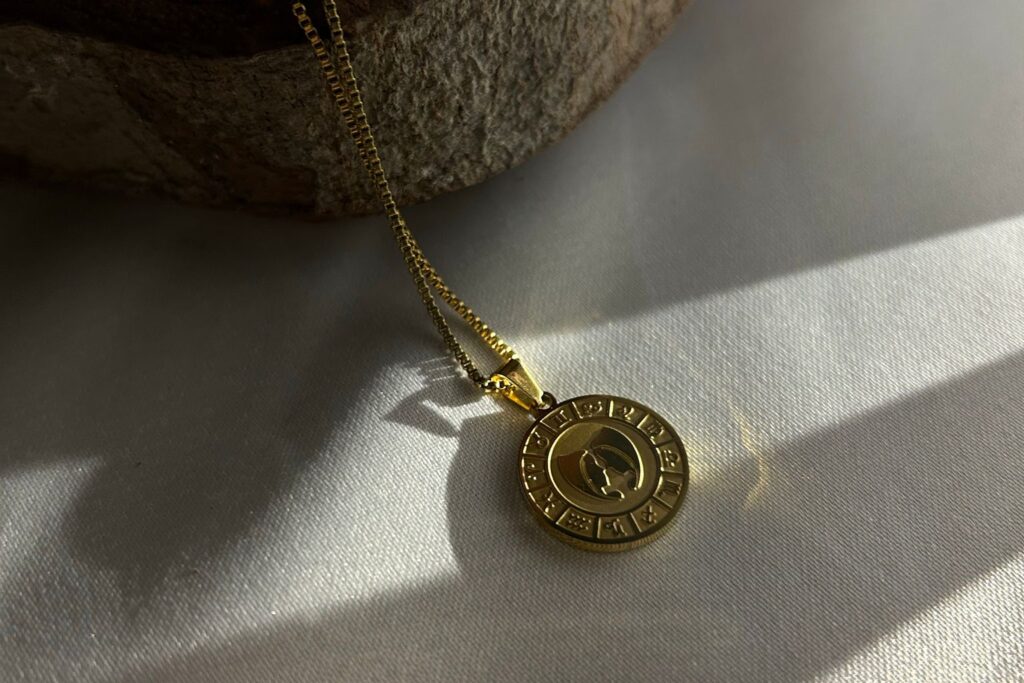
A pendant necklace is a chain with a single charm, stone or shape hanging from it. Bar, initial and cross pendants are all variations on the same idea.
Length: princess length, around the collarbone, is the classic spot.
Best with: V-necks, scoop necks and button-downs worn open at the collar.
How to wear it: keep a small gold or silver pendant on all week, then swap to a larger stone for dinner. On a budget, buy the chain in a good metal and save on the charm, since the chain takes the most wear. An initial or birthstone pendant also makes an easy, personal gift.
2. Dainty Chain Necklace
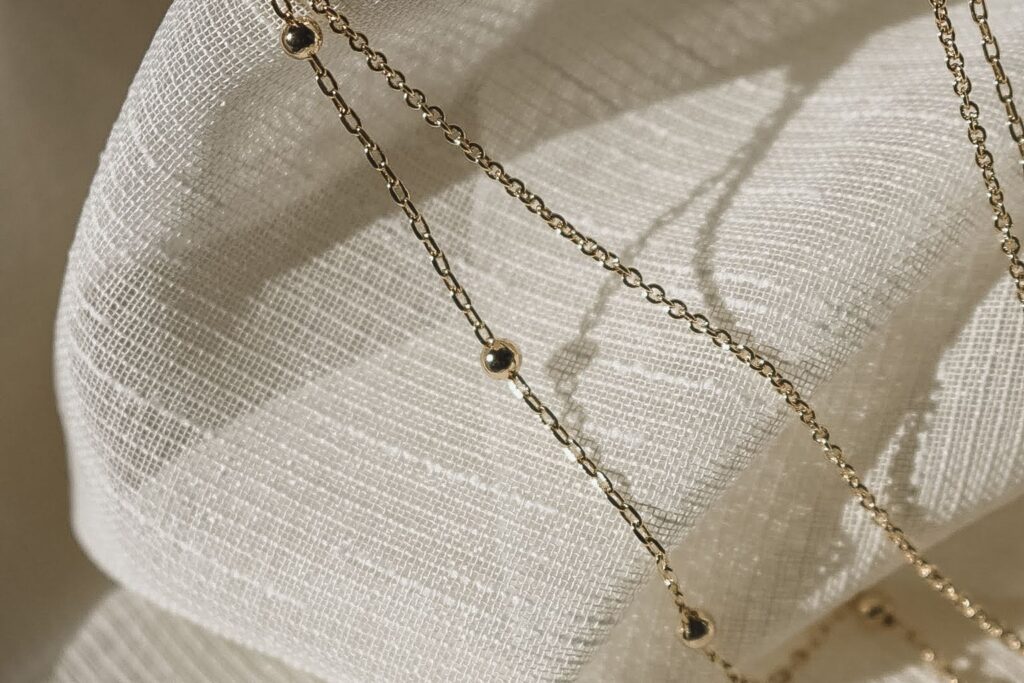
A dainty chain necklace is a fine, plain chain worn on its own with no pendant. It’s the quietest piece in your jewelry box and the one you’ll reach for most.
Length: princess length for daily wear, or a shorter collar length for layering.
Best with: crew necks, T-shirts and simple knits.
How to wear it: wear one alone for a clean look, or use it as the base layer of a stack. The chain style changes the feel a lot, which our chain guide further down breaks down. If you only buy one, pick a cable or box chain, because either can carry a pendant later.
3. Choker Necklace

A choker necklace sits snugly around the base of your neck. It can be a velvet ribbon, a tight chain, a row of pearls or a stiff metal band.
Length: the shortest standard length, though sources disagree on the exact inches (see the length chart below).
Best with: strapless, off-shoulder, boat-neck and spaghetti-strap tops.
How to wear it: a collar necklace is its wider, flatter cousin and sits on or just above the collarbone. Pick a thin chain choker for day and a beaded or crystal one for evening. Fashion-jewelry chokers are an easy, low-cost way to try the look first. Measure your neck before you buy, since a choker that’s even an inch too tight feels uncomfortable fast.
4. Pearl Necklace
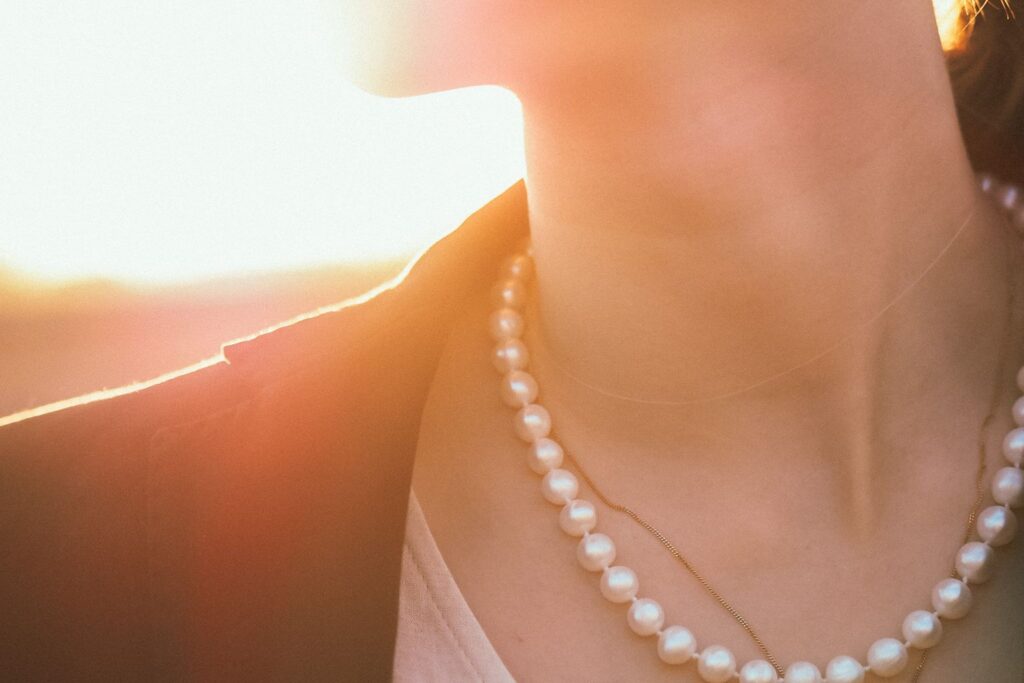
A pearl necklace is a strand of pearls, either all the same size or graduated, with larger pearls at the center. Under the Federal Trade Commission’s Jewelry Guides, a seller has to put “cultured” right before “pearl” for cultured pearls, and “imitation” or “simulated” for fakes.
Length: princess for a classic single strand, matinee for a longer look.
Best with: blouses, crew necks, little black dresses and wedding-guest outfits.
How to wear it: layer a short strand with a gold chain for a modern twist. Read the label closely, since the word in front of “pearl” tells you what you’re buying. Good imitation pearls are a fair choice for trend pieces, and cultured pearls are the buy for a strand you plan to keep.
5. Lariat Necklace
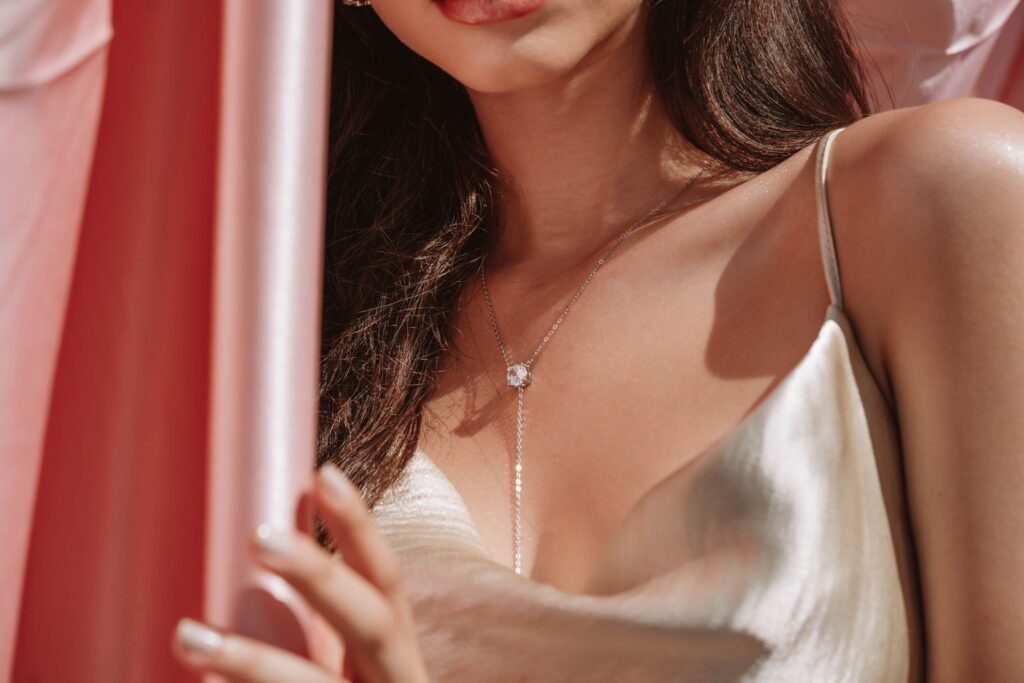
A lariat necklace is a long, open-ended chain with no clasp. You loop one end through the other or tie it loosely at the front. A Y-necklace looks similar but has a fixed drop and a regular clasp.
Length: matinee length or longer, so the tail can hang.
Best with: V-necks, plunging necklines and backless dresses (worn backward).
How to wear it: let the drop fall to the center of a V-neck. On a budget, a Y-necklace gives the same line without the knotting. For a backless dress, turn the lariat around so the tail runs down your spine; it’s a small trick that gets noticed.
6. Tennis Necklace
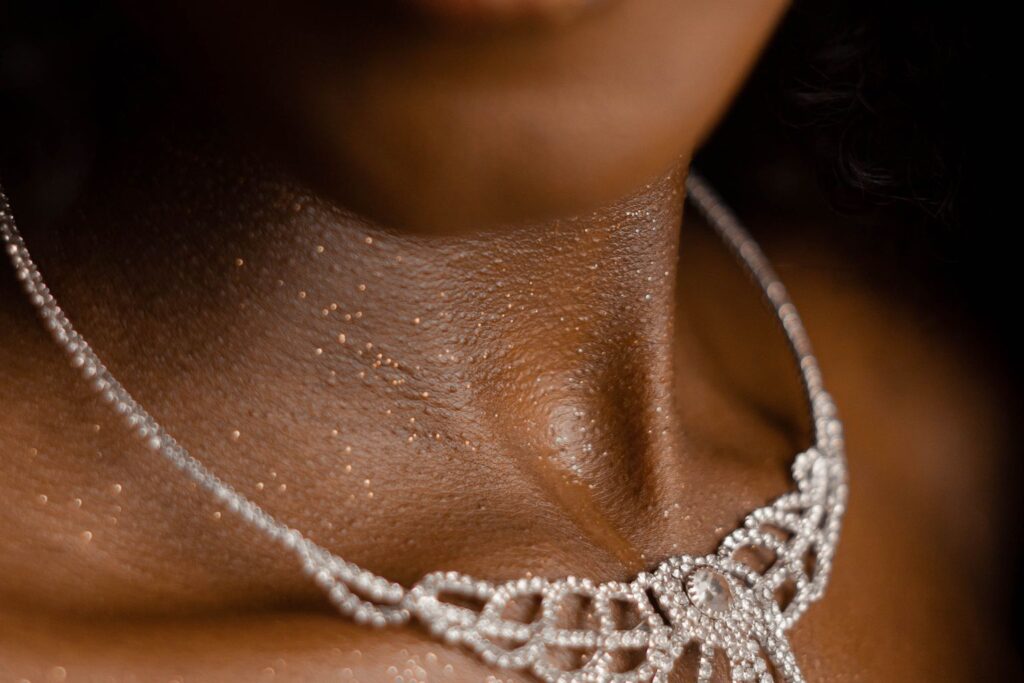
A tennis necklace, also called a riviere, is a single line of matching stones set side by side all the way around. The FTC Jewelry Guides say lab-grown diamonds must be clearly labeled with words like “laboratory-grown” or “laboratory-created.”
Length: princess length, so the stones sit on the collarbone.
Best with: strapless gowns, cocktail dresses and sharp blazers.
How to wear it: keep everything else simple and let the sparkle lead. For a smaller budget, look at lab-grown diamonds or cubic zirconia, and check that the tag names which one it is. A tennis necklace also pairs neatly with a matching tennis bracelet for weddings and black-tie events.
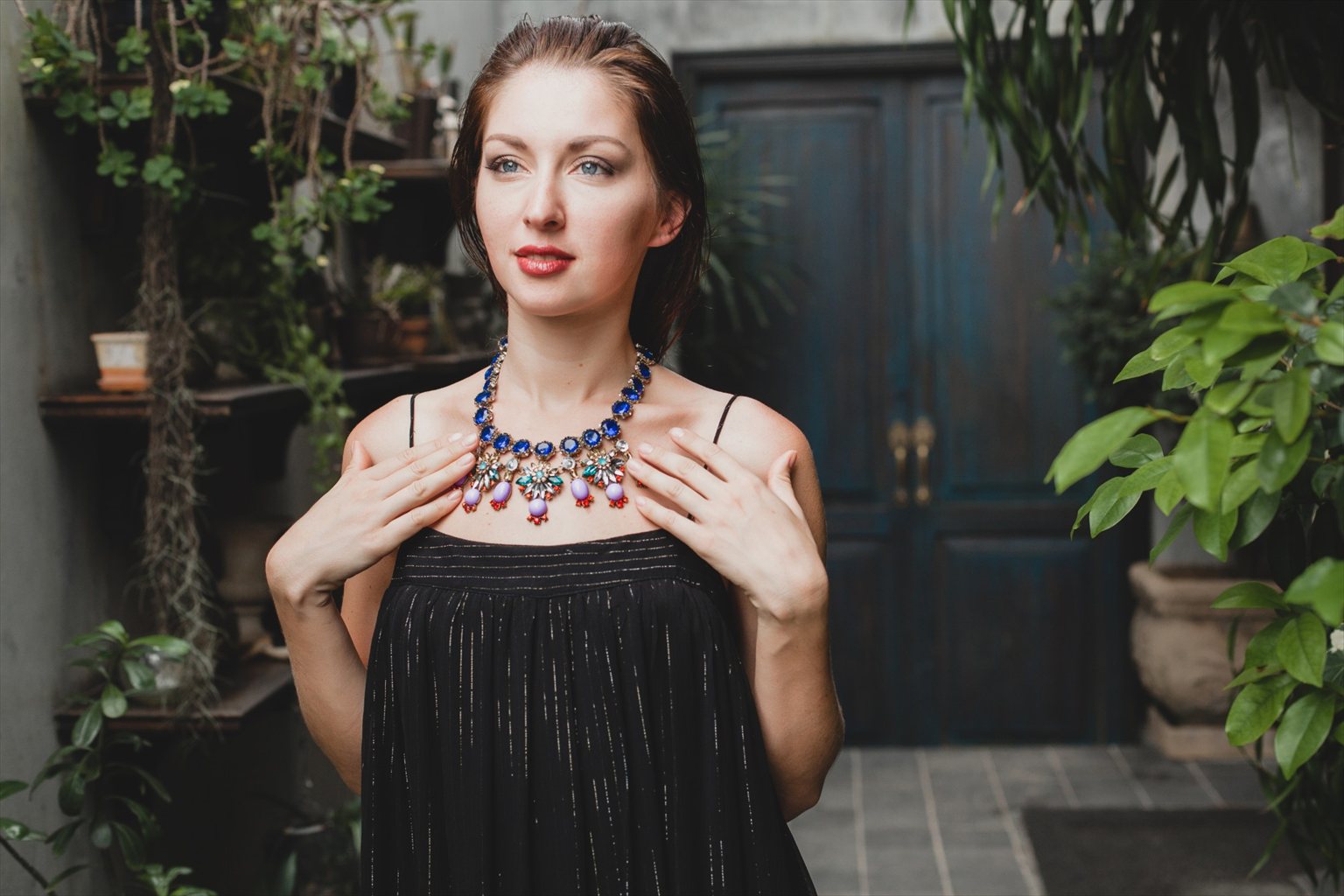
7. Statement Necklace
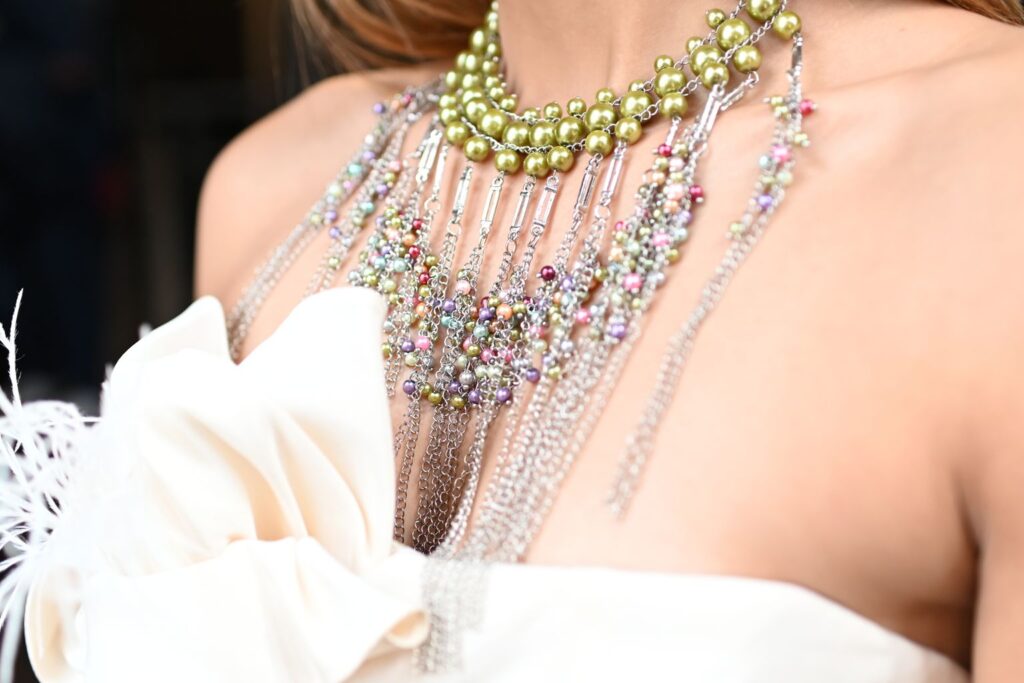
A statement necklace is one bold piece that does all the talking. Bib necklaces cover the upper chest like a collar, and festoon necklaces hang in draped swags of chain or stones.
Length: collar to princess, so the piece frames your neckline.
Best with: plain dresses, solid tops and high, simple necklines.
How to wear it: skip earrings or keep them tiny, and pull your hair back so the piece has room. Fashion jewelry is the smart budget pick here, because statement styles change from season to season. Bold is on trend this year: Pinterest’s 2026 trend report, covered by National Jeweler in January 2026, said jewelry will get “chunkier, bolder, and ‘golder.'”
8. Station Necklace
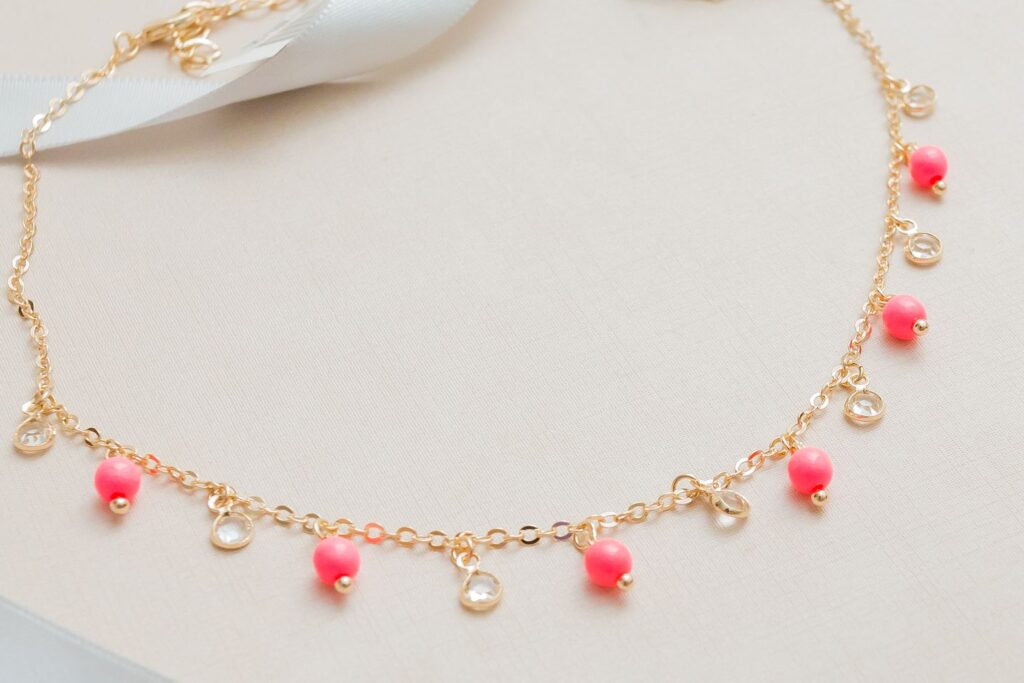
A station necklace is a fine chain with small stones, pearls or beads spaced evenly along it. It spreads a little sparkle all the way along the chain.
Length: princess length is most common.
Best with: crew necks, scoop necks and office knits.
How to wear it: it’s an easy middle step between a plain chain and a tennis necklace. Wear it alone or as the top layer over a dainty chain. Pearl stations look soft and polished at the office, while crystal or diamond stations dress up for evening.
9. Locket Necklace
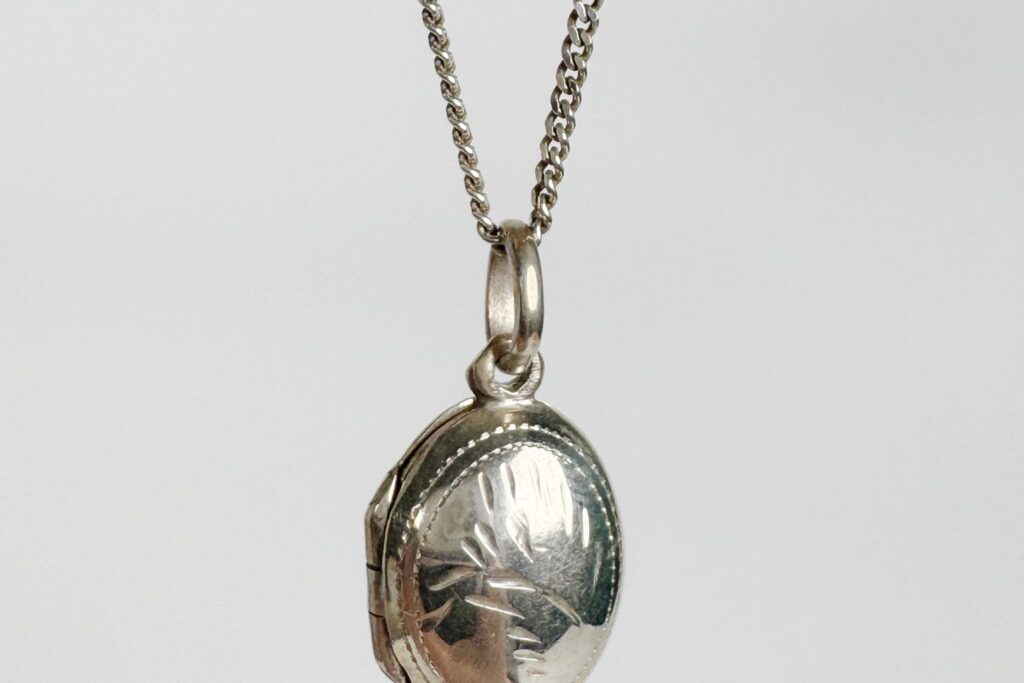
A locket necklace is a pendant that opens on a tiny hinge to hold a photo, a note or a keepsake. It’s the most personal piece on this list and a classic gift.
Length: princess or matinee, so the locket sits flat on your chest.
Best with: crew necks, cardigans and soft blouses.
How to wear it: wear it alone so it stays the focus, and choose a sturdy chain, since lockets are heavier than most pendants. Heirloom pieces are having a moment, too: Pinterest reported searches for “heirloom jewelry” up 45 percent in its 2026 forecast.
10. Layered Necklace
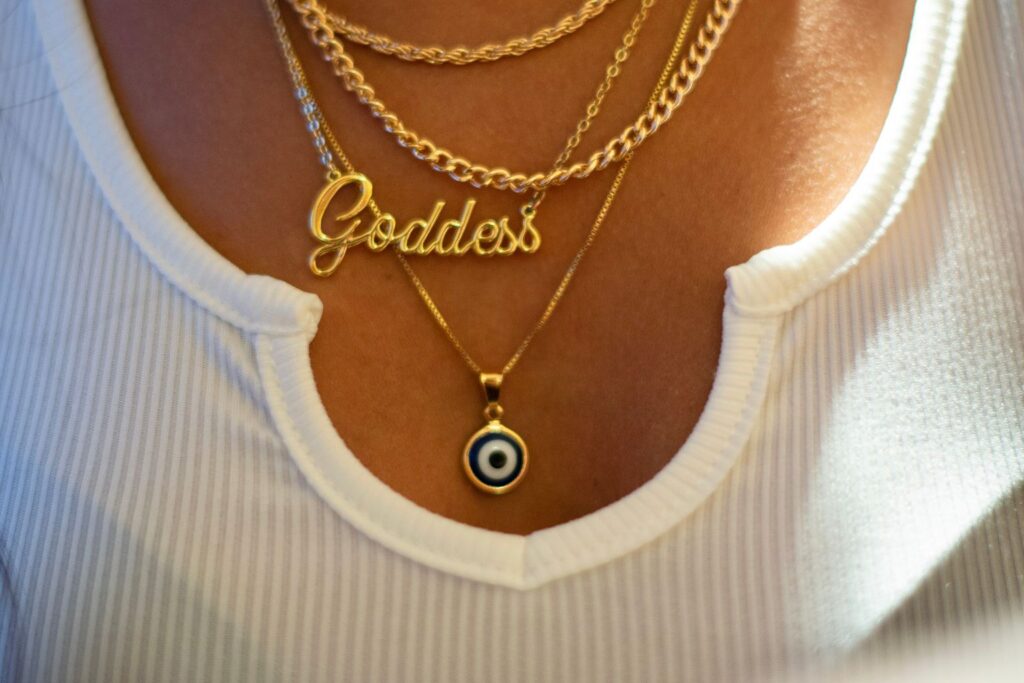
A layered necklace is two to four chains worn together at different lengths, or a single multi-strand piece that does the work for you. It looks effortless when each layer has a clear gap.
Length: mixed, such as a 16-inch, an 18-inch and a 20-inch chain together.
Best with: T-shirts, open collars and casual summer dresses.
How to wear it: vary the chain styles and weights so the layers don’t tangle into one. Mixing metals works too, and our guide on whether you can wear gold and silver together shows how to keep it looking planned. A pre-layered multi-strand necklace is the budget shortcut: one clasp, no tangles and the spacing already done.
What Are the Standard Necklace Lengths?
Standard necklace lengths run from the choker, the shortest, to the rope, the longest, with princess, matinee and opera in between. The catch is that length names aren’t fixed. Wikipedia’s necklace article lists a choker at 12 to 13 inches and a collar at 14 to 16 inches, while Brilliant Earth puts a choker at 14 to 16 inches and a collar at 12 to 14.
| Length name | Inches (per Wikipedia) | Where it sits | Best for |
|---|---|---|---|
| Choker | 12 to 13 | High on the neck | Strapless and off-shoulder tops |
| Collar | 14 to 16 | Base of the neck | Boat necks, open collars |
| Princess | 18 to 20 | On or just below the collarbone | Pendants, everyday wear |
| Matinee | 22 to 23 | Top of the bust | Blouses, office wear |
| Opera | About 30 | Below the bust | Evening wear, doubling up |
| Rope or lariat | Over 33 | Anywhere you style it | Knotting, wrapping, layering |
Those two well-known sources flip the choker and collar names, so shop by the inches on the tag and treat the names as a rough guide. Wrap a soft tape measure or a piece of string around your neck where you want the necklace to sit, then compare that number to the listing.
Your frame matters too. On a petite frame, a princess length can fall lower than expected, so try a shorter chain first. Taller frames carry matinee and opera lengths easily. Your neck size changes the fit as well: the same 16-inch chain can sit like a choker on one person and drop to the collarbone on another. If you’re between lengths, an extender chain lets you adjust by an inch or two.
Which Types of Necklaces Suit Each Neckline?
The types of necklaces that suit a neckline either echo its shape or fill the space it leaves open. A V-neck pairs with a pendant or lariat that points down, a crew neck pairs with a choker or a longer chain that sits below it, and a strapless top pairs with almost anything at collar or princess length.
| Neckline | Best necklace types | Skip |
|---|---|---|
| V-neck | Pendant, lariat, Y-necklace | Wide chokers |
| Scoop | Statement, pearl strand, station | Very long ropes |
| Crew | Choker, long pendant over the top | Princess length that hits the neckline |
| Boat or off-shoulder | Choker, collar, short statement | Long pendants |
| Sweetheart | Pendant, tennis, pearls | Bib necklaces |
| Turtleneck | Long pendant, opera-length chain | Chokers |
| Strapless | Tennis, statement, choker | Very fine chains that disappear |
| Collared shirt | Dainty chain under the collar, short pearls | Bulky bibs |
Use the table as a starting point. If a necklace and a neckline fight for the same space, move the necklace up or down a length and the problem usually goes away. Busy prints and heavy embellishment need less jewelry, while plain fabrics give a statement piece room to shine. A high-neck dress with a long pendant layered over the fabric is an easy fix when nothing short works.
Which Necklace Chain Styles Should You Know?
The chain changes how a necklace looks as much as the style does. A cable chain reads classic, a herringbone reads sleek and a paperclip reads modern, even at the same length.
| Chain | Looks like | Best for |
|---|---|---|
| Cable | Simple oval links | Pendants, everyday wear |
| Curb / Cuban | Flat, twisted interlocking links | Bold looks, men’s styles |
| Box | Small square links | Pendants, a clean look |
| Rope | Twisted strands like a rope | Texture, layering |
| Herringbone | Flat, smooth V-pattern | Sleek, liquid look |
| Snake | Smooth, round and bendy | Minimal outfits |
| Figaro | Long link followed by short links | Casual, everyday |
| Paperclip | Long, open rectangular links | Modern layering |
Herringbone and snake chains lie flat and can kink, so store them lying flat in a tray or box. Cable and box chains pair well with pendants.
The clasp matters too. A lobster clasp, with its small spring-loaded hook, is the easiest to open with one hand. Spring-ring clasps are common on fine chains, and toggle clasps, a bar that slips through a ring, are often used on chunkier statement pieces.
How Do You Choose a Necklace Metal for Your Budget?
Sterling silver and gold vermeil give you real precious metal at a mid-range budget, solid gold is the long-term buy, and plated fashion jewelry works for trends you might not keep. The label tells you which one you’re paying for, and US rules define the key terms.
The FTC Jewelry Guides say “sterling” means at least 925 parts per 1,000 pure silver, which is why sterling pieces are stamped 925. “Vermeil” must be sterling silver coated with gold of at least 10 karat, at least 2.5 microns thick. The same guides say a seller must disclose rhodium plating, the shiny white coating often used on white gold and silver.
Karat tells you how much of a gold piece is pure gold out of 24 parts. That makes 14k gold 14 parts in 24, or about 58 percent gold, and 18k about 75 percent. Higher karat looks richer in color, while lower karat is harder and stands up better to daily knocks.
Gold tones suit warm skin and silver tones suit cool skin, but that’s a guideline you can break. Silver tarnishes over time, so store it in a closed bag and wipe it with a soft cloth after wear.
Bottom Line
Start with the three everyday types of necklaces: a pendant, a dainty chain and a pearl strand. Add a choker, a lariat and a tennis necklace for occasions, then build out with a statement piece, a station necklace, a locket and a layered set. When you shop, trust the inches on the tag over the length name.
Look after the pieces you buy and they’ll last for years. Put necklaces on after perfume and lotion, take them off before swimming or the gym, and store each one separately or fastened so the chains don’t knot together.
Necklaces have a long history, with Wikipedia citing evidence of necklace making in Africa dating back 50,000 years. The labels are newer and stricter: the FTC Jewelry Guides set what words like sterling, vermeil, cultured pearl and lab-grown can mean on a US price tag.
Frequently Asked Questions
What are the different types of necklaces?
The main types of necklaces are pendant, dainty chain, choker, pearl, lariat, tennis, statement, station, locket and layered. They’re also grouped by length, from choker and collar up through princess, matinee, opera and rope, and by chain style, such as cable, curb, box and herringbone.
What is the most versatile necklace to own?
A fine pendant or a dainty chain at princess length, about 18 inches, is the most versatile necklace. It sits on the collarbone, works with crew necks and V-necks, and goes from office to dinner. Pick sterling silver or solid gold so it holds up to daily wear.
What is the difference between a choker and a collar necklace?
A choker fits snugly around the neck, while a collar necklace is usually wider and flatter and rests near the collarbone. Sources don’t agree on the inches: Wikipedia lists chokers at 12 to 13 inches, while Brilliant Earth lists them at 14 to 16. Check the measurement on the tag.
What is a lariat necklace?
A lariat necklace is a long chain with no clasp. You wear it by looping one end through the other or tying a loose knot at the front, so the tail hangs down. A Y-necklace looks similar, but it has a fixed drop and a standard clasp, which makes it easier to put on.
What is a festoon necklace?
A festoon necklace is a statement style made of draped swags of chain, beads or stones that hang in curves between fixed points. It covers more of the chest than a simple strand, so it looks best with a plain, open neckline such as a strapless or scoop-neck dress.
What types of necklaces do men wear?
Men most often wear chain necklaces, especially curb or Cuban, rope, box and figaro chains, plus pendants such as dog tags, crosses and medallions. Beaded and leather cord necklaces are popular for casual outfits. Most men’s chains are longer than a choker and sit at or below the collarbone.
What jewelry is Gen Z wearing?
Pinterest’s 2026 trend report doesn’t split jewelry by age, but it points to bigger, bolder pieces. National Jeweler, covering the report in January 2026, said jewelry will get chunkier, bolder and more gold, with searches for “maximalist accessories” up 105 percent and “heirloom jewelry” up 45 percent.
What metal is best for an everyday necklace?
Sterling silver and solid gold are the best metals for an everyday necklace because they hold up to daily wear. Sterling is at least 92.5 percent pure silver, which is what the 925 stamp means. Gold vermeil is a good middle option if you prefer a gold tone.