

Winter has a way of exposing every gap in a man’s wardrobe. The first properly cold morning arrives, you grab a thin jacket and a cotton tee, and by lunch you’re either shivering or sweating under a coat that’s far too heavy for the office. The good news is that you don’t need a closet full of gear. A short list of well-chosen winter essentials for men covers almost everything the season throws at you, from icy commutes to weekend dinners. The trick is to build in layers, pick fabrics that hold heat (wool beats cotton every time), and choose pieces in colors that mix together. Below are the 15 pieces worth owning, how to layer them, which shoes and accessories earn their place, and two cheat sheets you can screenshot for quick outfit decisions.
What are the winter essentials for men?
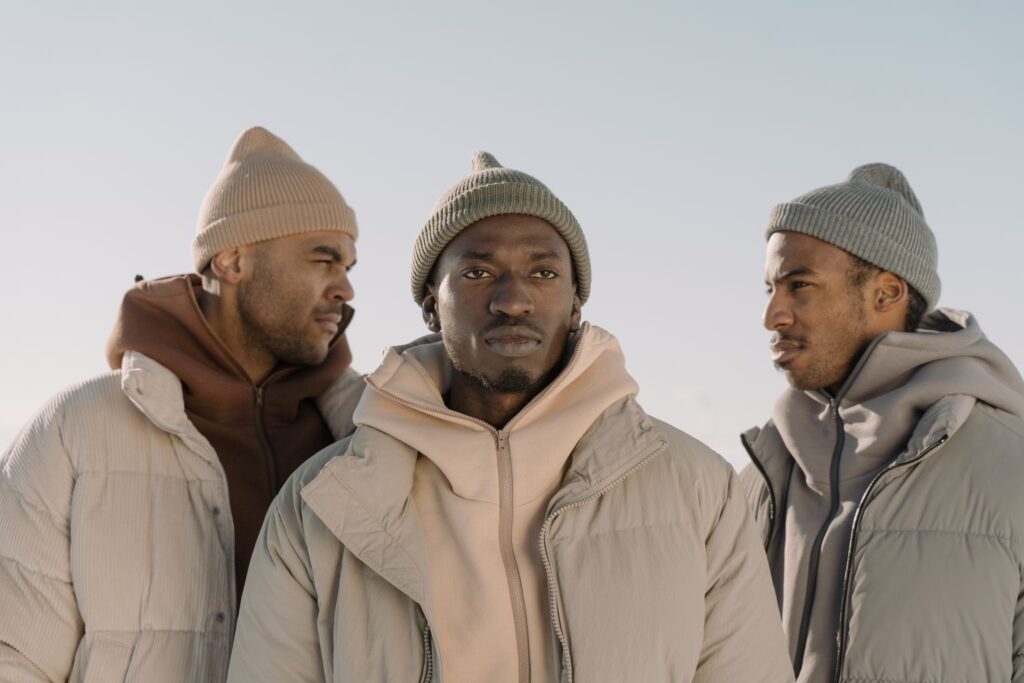
The core winter essentials for men are a thermal base layer, a couple of warm shirts, a wool sweater, a turtleneck, a fleece or quarter-zip, a wool overcoat, a puffer jacket, dark jeans, warm trousers, waterproof boots, Chelsea boots, wool socks, a beanie, a scarf and a good pair of gloves. That’s 15 pieces, and together they give you dozens of outfits.
Here’s the full list at a glance, with what each piece does for you.
| # | Essential | Why you need it | Best colors |
| 1 | Thermal base layer | Keeps sweat off your skin and holds heat | White, grey, black |
| 2 | Flannel or oxford shirts | Warm mid layer that works for office and weekend | Muted checks, white, light blue |
| 3 | Merino crewneck sweater | Thin warmth that fits under any coat | Navy, charcoal, oatmeal |
| 4 | Turtleneck | Sweater and scarf in one, sharp under a blazer | Black, camel, cream |
| 5 | Fleece or quarter-zip | Easy casual layer you can open on the move | Grey, navy, olive |
| 6 | Wool overcoat | Makes any outfit look polished | Camel, navy, charcoal |
| 7 | Puffer jacket | Maximum warmth on the coldest days | Black, olive, navy |
| 8 | Dark-wash jeans | Goes with every boot and sweater | Indigo, black |
| 9 | Wool or corduroy trousers | Warm, smart option for work and dinners | Grey, navy, brown, olive |
| 10 | Waterproof lace-up boots | Grip and dry feet on slush and ice | Brown, dark brown |
| 11 | Chelsea boots | Slip-on boot that dresses up or down | Black, brown, tan suede |
| 12 | Wool socks | Warm, dry feet all day | Grey, navy, oatmeal |
| 13 | Beanie | Stops heat escaping from your head | Charcoal, navy, camel |
| 14 | Scarf | Seals the gap at your collar | Solid or subtle check |
| 15 | Gloves | Protects hands, finishes the look | Brown or black leather |
You don’t have to buy all 15 at once. If you’re starting from scratch, get the overcoat, one sweater, the waterproof boots and gloves first. Those four make the biggest difference to how warm you feel and how put together you look.
What is the 3 layer rule for winter?
The 3 layer rule means dressing in a base layer, a mid layer and an outer layer instead of one thick piece. It’s also the easiest way to wear your winter essentials for men together. Each layer has its own job, and because air gets trapped between them, three thinner layers keep you warmer than one bulky one. You can also peel off a layer when you walk into a heated room.
Base layer: keeps sweat off your skin
This is what touches your body. It should be thin, snug and made from merino wool or a synthetic blend. Skip cotton here. Cotton soaks up sweat and stays wet, and wet fabric pulls heat away from you fast. Merino wool is the favorite for a reason: it’s soft, it stays warm even when slightly damp, and it doesn’t hold odor the way synthetics can.
Mid layer: traps the heat
Your shirt, sweater, fleece or cardigan. This is the insulating layer, and it’s also the one people see the most, so it’s where your style shows.
Outer layer: blocks wind, rain and snow
Your coat or jacket. Its job is to stop wind and moisture from reaching the warm air you’ve built up underneath. The National Weather Service recommends dressing for the outdoors even if you don’t plan to be out for long, and a proper outer layer is the piece that makes that easy.
Which base and mid layers should men wear in winter?
The best base and mid layers are the ones you’ll wear three or four days a week without thinking. Go for solid, neutral colors so everything pairs with everything.
1. Thermal base layer
A long-sleeve merino or synthetic thermal top (and matching leggings if your winters drop below freezing) is the least glamorous item on this list and the one you’ll thank yourself for. Wear it under a shirt and nobody will know it’s there.
2. Flannel or oxford shirts
Two or three warm button-downs carry you through most of the week. Flannel in a muted check works for weekends, while a heavier oxford in white or light blue goes under a sweater for work. Brushed cotton is fine at this layer because your base layer is handling the sweat.
3. Merino or lambswool crewneck sweater
If you only buy one sweater, make it a crewneck in navy, charcoal or oatmeal. It goes over a collared shirt for the office and over a plain tee on Saturday. Merino is thin enough to fit under a coat without bulk, while lambswool is a little chunkier and warmer.
4. Turtleneck or rollneck
A fine-knit turtleneck does the job of a scarf and a sweater at the same time. Black or camel under a blazer or overcoat looks sharp with almost no effort, and it’s a smart choice for evenings out.
5. Fleece or quarter-zip pullover
For casual days, a fleece or quarter-zip sweater is the easiest grab-and-go layer. The zip lets you control how warm you are on the move, which is handy on a long commute or a winter walk.
What winter coats and jackets should every man own?

Most men need two outer layers: a smart wool coat for city and work, and a puffer for real cold and casual days. Between them, you’re covered in nearly every situation. Coats are also the priciest winter essentials for men, so spend here and save elsewhere.
6. Wool overcoat
A knee-length or mid-thigh overcoat in camel, navy or charcoal is the single piece that makes a winter outfit look intentional. Look for a wool content of at least 70% for real warmth, and buy it one size roomier than you think if you plan to wear chunky knits underneath. Throw it over a suit, a sweater and chinos, or even a hoodie and jeans.
7. Puffer or down jacket
When the temperature really drops or the wind picks up, a puffer is warmer than any wool coat. Down gives the most warmth for its weight, and synthetic fill copes better with wet weather. A matte finish in black, olive or navy looks more grown up than a shiny one. For milder days at the start and end of the season, a suede or leather jacket fills the gap nicely, and our roundup of suede jacket styles has plenty of options that work for men too.
What pants should men wear in winter?
Pants get the least thought of all the winter essentials for men, yet fabric matters here more than anywhere. Men should wear heavier fabrics in winter: raw or dark denim, wool trousers, corduroy and moleskin all hold warmth far better than lightweight summer chinos.
8. Dark-wash jeans
A pair of dark, slim or straight jeans in a mid to heavy weight is the most versatile item in a winter wardrobe. They work with boots, sweaters and both of your coats. Keep the wash dark and clean so they can pass for smart casual.
9. Wool or corduroy trousers
For work and dinners, wool trousers in grey or navy look polished and keep your legs warm. Corduroy in brown, olive or tan is the relaxed version and has a nice texture that pairs well with knitwear. You can wear a thin thermal legging underneath either one on bitter days.
What shoes should men wear in winter?
The best winter shoes for men are waterproof or water-resistant, have a grippy rubber sole and are tall enough to keep snow and slush away from your socks. Two pairs of boots will cover most of your needs. Boots also take the most abuse of any winter essentials for men, so buy the best pair you can afford.
10. Waterproof lace-up boots
A leather or treated suede boot with a lug sole is your everyday workhorse for wet streets and icy sidewalks. Brown pairs with nearly everything, including dark trousers. If you’ve ever wondered whether brown footwear clashes with darker pants, our guide on brown shoes with black pants explains how to make the combination work.
11. Chelsea boots
Chelsea boots slip on and off in seconds and look neat with jeans, chinos and wool trousers. A suede pair is great for dry days, while smooth leather with a rubber sole handles light rain. Black reads dressier, brown more relaxed.
Which winter accessories do men really need?
Of all the winter essentials for men, accessories are the cheapest and the most underrated. You really need four: warm socks, a hat, a scarf and gloves. Your head, neck, hands and feet lose heat the fastest, so these small pieces make a bigger difference than an extra sweater.
12. Wool socks
Thick merino or wool-blend socks keep your feet warm and dry inside boots. Cotton socks get damp and cold within an hour of walking in snow. Buy a multipack and you’ll never go back. Good socks are the cheapest upgrade among all the winter essentials for men.
13. Beanie
A ribbed wool beanie in charcoal, navy, camel or black goes with every coat on this list. Fold the cuff once and wear it so it covers the tops of your ears.
14. Scarf
A wool or cashmere scarf seals the gap between your collar and your neck, which is exactly where cold air sneaks in. Pick a solid color or a subtle check that matches your overcoat. A simple loop or a “Parisian knot” (folded in half, ends pulled through the loop) keeps it tidy.
15. Gloves
Lined leather gloves look smart with an overcoat, and knit gloves with touchscreen fingertips are handy for casual days. If you live somewhere with harsh winters, insulated gloves or mittens are worth the extra bulk.
How can men stay warm in winter without looking bulky?
You stay warm without looking bulky by choosing thin, warm fabrics close to the body and saving the volume for your outer layer. A merino base layer, a fine-knit sweater and a well-cut overcoat will keep you warmer than three thick hoodies stacked on top of each other. The same rule applies to all your winter essentials for men: fit beats thickness.
A few habits help a lot:
- Keep your colors close. Two or three tones (navy, grey and camel, for example) make layers look planned instead of piled on.
- Make sure each layer is a little longer and a little roomier than the one beneath it, so nothing bunches at the wrists or hem.
- Mix textures instead of adding bulk. Flannel, knit and wool next to each other look interesting without extra thickness.
- Get your coat tailored at the sleeves. A coat that ends at the base of your thumb looks far sharper than one covering your knuckles.
If you want to see how these pieces fit into this year’s looks, our post on winter fashion trends covers the colors and silhouettes showing up everywhere this season.
What should men wear in winter for different occasions?
The same 15 winter essentials for men can be mixed into outfits for work, weekends, dates and travel. Use this cheat sheet when you’re standing in front of the closet in the morning.
| Occasion | Outfit formula | Footwear |
| Office | Oxford shirt + merino sweater + wool trousers + overcoat | Black or brown Chelsea boots |
| Weekend | Thermal + flannel shirt + dark jeans + puffer + beanie | Waterproof lace-up boots |
| Date night | Turtleneck + dark jeans or wool trousers + overcoat | Suede Chelsea boots |
| Snowy commute | Thermal + quarter-zip + jeans + puffer + scarf + gloves | Waterproof boots + wool socks |
| Travel day | Fleece or hoodie + jeans + puffer (packs small) | Chelsea boots (easy at security) |
| Winter wedding or event | Suit + fine turtleneck or shirt and tie + overcoat + leather gloves | Polished black leather boots or shoes |
Conclusion
Building a set of winter essentials for men is less about owning a lot and more about owning the right pieces in fabrics that work. Start with a warm base layer, add a sweater or shirt you love, and finish with a coat that fits well. Then let the boots, socks, beanie, scarf and gloves do the quiet work of keeping the cold out.
Pick a tight color palette, follow the 3 layer rule, and you’ll find that 15 pieces can carry you from the first frost to the last snow without ever feeling like you have nothing to wear. For more seasonal outfit ideas and style guides, keep exploring FashionVise.
Frequently Asked Questions
What are the must-have winter essentials for men?
The must-have winter essentials for men are a wool overcoat or puffer jacket, a warm sweater, a thermal base layer, dark jeans or wool trousers, waterproof boots, wool socks, a beanie, a scarf and gloves. Start with the coat, boots and gloves if you are on a budget.
What is the 3 layer rule for winter?
Wear a base layer that keeps sweat off your skin, a mid layer such as a sweater or fleece that traps heat, and an outer layer that blocks wind and moisture. Three thin layers keep you warmer than one thick one.
What should men wear in winter to stay warm?
Choose wool or merino close to the skin, add a sweater or flannel shirt, and finish with an insulated coat. Cover your head, neck, hands and feet with a beanie, scarf, gloves and wool socks, since those areas lose heat fastest.
Is cotton good for winter clothing?
Cotton is fine for a shirt or jeans worn over a proper base layer, but avoid it right against your skin. It absorbs sweat and stays wet, which makes you feel colder. Merino wool or synthetic thermals work better.
How many winter coats does a man need?
Most men need two: a wool overcoat for work and evenings, and a puffer or down jacket for very cold or wet days. A lighter suede or leather jacket is a nice extra for mild winter days.
What colors are best for men’s winter clothes?
Navy, charcoal, camel, black, olive and oatmeal are the easiest winter colors because they all mix together. Keep your coats and boots neutral, and add color with a scarf, beanie or sweater.