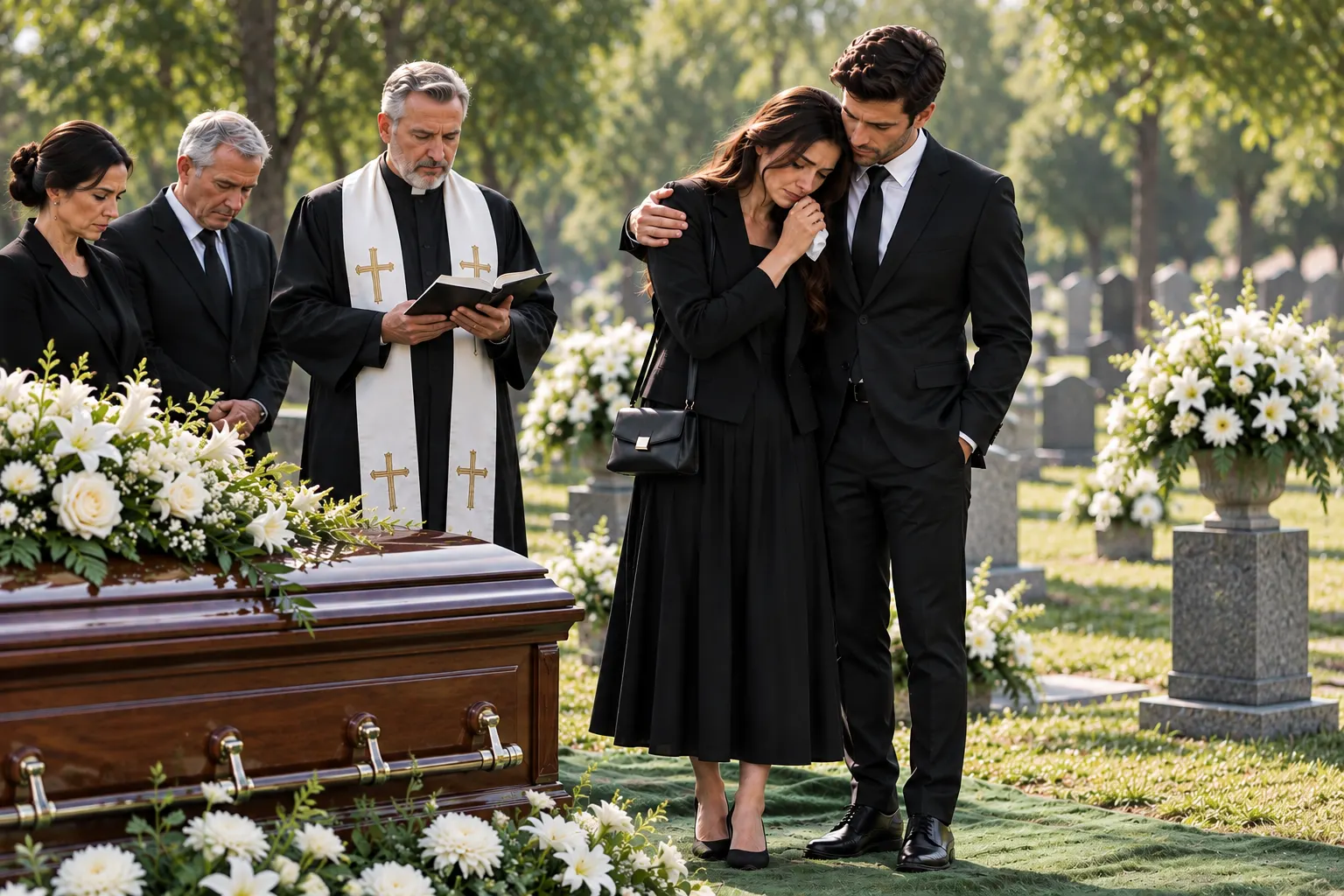

Quick answer: What to Wear to a Funeral For most funerals, wear dark, plain clothes that cover your shoulders and knees: a dark suit or trousers with a collared shirt for men, and a dark dress, skirt or trouser outfit for women. Black is safest, but navy, charcoal and dark green are fine. The big exception is when the family asks for something else, or when the tradition calls for white, as at many Hindu and some Buddhist funerals. When in doubt, ask someone close to the family.
Why does funeral attire still matter?
Nobody at a funeral is judging your outfit. But people do notice when something pulls attention away from the person being remembered, and that’s the whole logic behind funeral dress codes. You’re aiming to blend in, look like you made an effort, and be comfortable enough to stand, sit, walk to a graveside and maybe hug a lot of people.
That last part gets overlooked. A funeral can mean two or three hours on your feet, an uneven cemetery path and a reception afterwards. Shoes you can’t walk in and a jacket you can’t lift your arms in will make a hard day harder.
What to Wear to a Funeral Check the notice before you pick anything
Read the obituary, the invitation or the family’s message before you open your wardrobe. More families now write the dress code in plainly:
- “Celebration of life” usually means brighter colours are welcome, sometimes encouraged.
- “Wear their favourite colour” or a sports team’s shirt is a direct request. Follow it.
- “Casual dress” means smart casual, not gym wear.
- No mention at all means the traditional default: dark, plain and covered.
If the notice says nothing and you’re unsure about the religion or culture involved, a short text to a mutual friend (“Is there anything I should know about what to wear?”) is completely normal. Nobody minds that question.
What should women wear to a funeral?
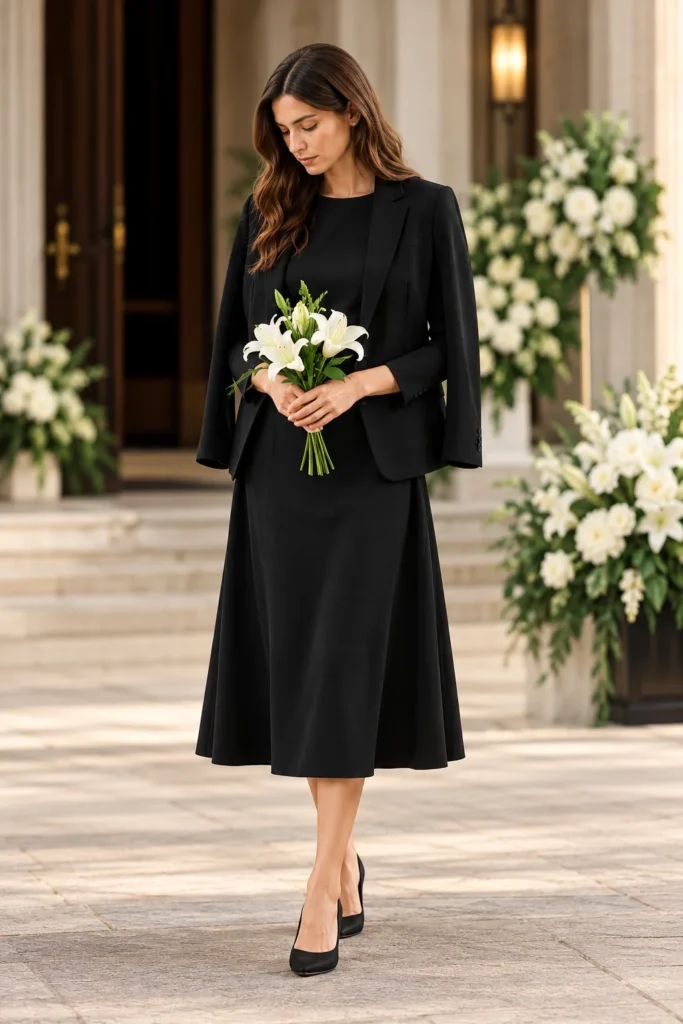
A dark dress or a dark top with trousers or a skirt is the standard, and you probably already own something that works. Look for a hem at or below the knee, covered shoulders (a cardigan or blazer over a sleeveless dress is fine), and a neckline you won’t have to adjust when you bend down to hug someone seated.
Outfits that work
- A dark sheath or wrap dress with a cardigan or blazer. The most reliable choice for a church, temple or chapel service.
- Tailored trousers with a plain blouse or fine knit. Just as appropriate as a dress, and far more practical for a graveside or a long day.
- A midi skirt with a long-sleeved top in matching or tonal dark shades.
- A dark trouser suit if you’re giving a eulogy, carrying something or want to look a touch more formal.
Fabric, shoes and accessories
Matte fabrics like wool crepe, cotton and jersey look calmer than satin or sequins. Avoid anything sheer unless it’s lined.
Shoes are where most people go wrong. Block heels, loafers or smart flats beat stilettos, which sink into grass at a burial. Keep jewellery small: stud earrings, a watch, a simple chain. A dark, structured bag big enough for tissues and sunglasses is more useful than a tiny clutch.
In India, a plain salwar kameez or a simple sari in white, cream or a muted pastel is the usual choice at Hindu funerals and prayer meetings (more on white below). Skip heavy embroidery, zari work and bright bindis.
What women should avoid
- Bright prints, neon and large florals (unless the family asked for colour)
- Short hemlines, deep necklines or bodycon fits
- Sparkle: sequins, metallics, statement jewellery
- Strong perfume, which can be overwhelming in a closed room
What should men wear to a funeral?
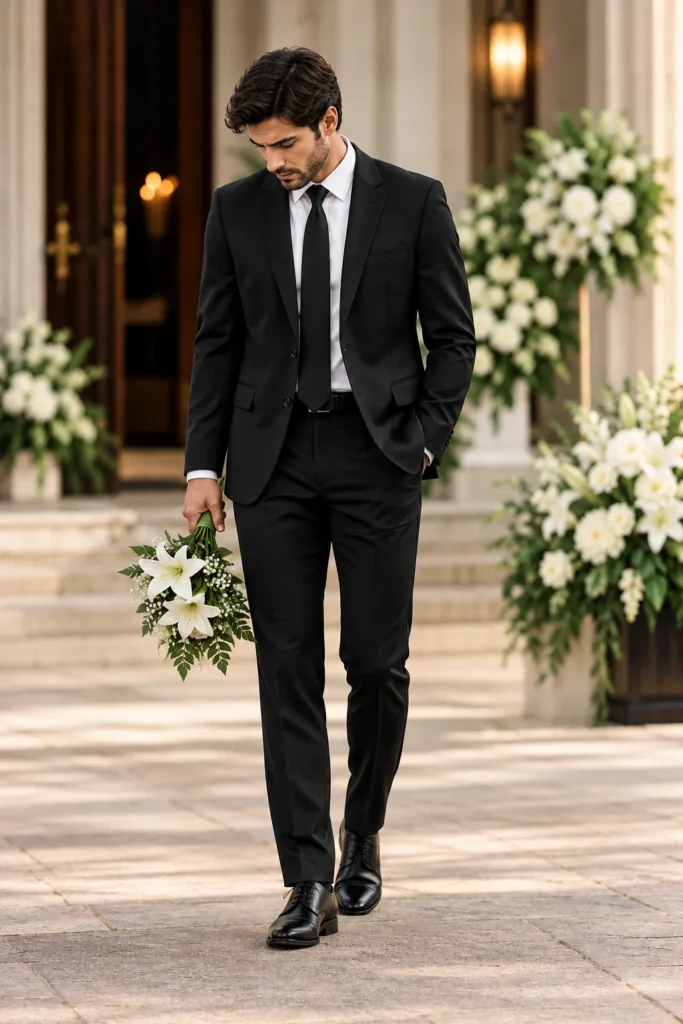
A dark suit, a white or light-blue shirt and a dark, plain tie covers almost every Western-style funeral. Don’t own a suit? Dark trousers, a collared shirt and a dark jumper or blazer is perfectly respectable. Nobody expects you to buy a suit for one afternoon.
Men’s funeral attire, from most to least formal
- Dark suit and tie. Black, charcoal or navy. Charcoal is often the smarter pick because it doesn’t look like a waiter’s uniform under bright lights.
- Blazer and trousers. A navy or charcoal blazer with grey or dark trousers, collared shirt, tie optional.
- Smart casual. Chinos or dark trousers, a collared shirt or polo, and a plain knit layer. Fine when the family has asked for casual dress.
The details that make it look right
- Tie: solid black, navy or a very subtle pattern. Leave the novelty and cartoon ties at home unless the family specifically asks.
- Shoes: polished black or dark brown leather. Clean them the night before; scuffed shoes are the thing people notice most with a dark suit.
- Socks: dark, so they disappear when you sit.
- Belt: matches your shoes.
- Fit: a slightly loose suit you can move in beats a sharp one you can’t lift your arms in if you’re a pallbearer.
If you’re a pallbearer, ask the funeral director or family whether pallbearers are matching anything (often the same tie or gloves). Wear shoes with grip, because you may be walking on wet grass carrying real weight.
For Hindu and Sikh funerals in India, a plain white or light kurta-pyjama is standard for men. Some Sikh families also expect a head covering at the gurdwara; a plain handkerchief or patka is fine if you don’t wear a turban.
What should you wear to a wake or a viewing?
Slightly less formal than the funeral itself, but still dark and tidy. A viewing (also called a visitation) usually happens at a funeral home, often in the evening before the service. People drop in for 20 to 40 minutes, so business-casual is the norm: trousers and a collared shirt, a plain dress, or a dark knit with tailored trousers. A tie is optional for men.
A wake depends on where you are. In Irish, British and many Catholic families, it’s often held at the family home or a pub and can be relaxed. In the US, “wake” and “viewing” are used almost interchangeably. Either way, the same rule applies: dress one notch below the funeral, never down to jeans and a hoodie.
| Event | Typical formality | Safe outfit |
| Funeral service | Formal | Dark suit or dark dress / trousers |
| Viewing / visitation | Business casual | Dark trousers, collared shirt or plain dress |
| Wake | Business casual to smart casual | Dark knitwear, trousers, simple dress |
| Burial / graveside | Same as the service, plus weather gear | Add a dark coat and grippy shoes |
| Celebration of life | Whatever the family asks | Often colour; check the invite |
| Prayer meeting / chautha (India) | Simple, modest | White or light kurta, salwar or sari |
Going straight from work to a viewing? Your office clothes are probably fine. Lose anything loud, like a bright scarf or a logo lanyard, and you’re set.
Can you wear white to a funeral?
It depends entirely on the tradition. At a Western Christian funeral, an all-white outfit stands out and can read as bridal, so most people avoid it. A white shirt under a dark suit is completely normal, though.
At Hindu funerals, white is the expected colour of mourning, and turning up in black can feel out of place. Many Buddhist families in Sri Lanka, Cambodia and parts of China also wear white, and some Chinese families dress mourners in white or muted tones and avoid red. Sikh mourners often wear white or light colours too.
So the honest answer: white is either wrong or exactly right, and the family’s background decides which.
Can you wear jeans to a funeral?
Usually no. Jeans read as casual at a traditional service, even dark, smart ones. If they’re genuinely all you have, choose the darkest, plainest pair with no rips, and dress everything else up: a collared shirt, a blazer or dark knit, and proper shoes rather than trainers.
The exception is a funeral where the family has asked for casual clothing, or a rural or outdoor service where everyone will be in practical gear. Then dark jeans are fine.
Do other religions and cultures have their own rules?
Yes, and a few are worth knowing before you go:
- Muslim funerals: modest, loose clothing covering arms and legs. Women usually cover their hair at the mosque; carry a plain scarf. Shoes come off inside the prayer area, so wear clean socks.
- Jewish funerals: dark, modest dress. Men often wear a kippah, usually provided at the door.
- Sikh funerals: white or muted colours, heads covered in the gurdwara, shoes removed.
- Ghanaian and some West African funerals: often red and black, or a specific family cloth. These can be large, colourful events, so ask.
If you’re not part of the community, dressing modestly and plainly in muted colours is a safe fallback. Hosts tend to appreciate the effort far more than they’d judge a small slip.
How do you dress for the weather, or for children?
Hot weather. Linen, cotton and lightweight wool in dark shades will keep you far cooler than polyester. Men can carry the jacket and put it on for the service itself. Women can swap tights for bare legs and a longer hem. In a North Indian May or a Texas July, nobody expects a three-piece suit at a graveside.
Cold or wet weather. A plain dark coat, a black or navy umbrella (not the bright golf one from the car boot) and waterproof shoes. Burials don’t get postponed for drizzle.
Children. Keep it simple and comfortable: dark trousers or a plain dress, a clean collared shirt or jumper, shoes they can actually walk in. A child in tidy navy is perfect. If the only clean option has a cartoon on it, put a plain cardigan over it and move on.
What are the most common funeral outfit mistakes?
Most slip-ups aren’t about colour at all. They’re practical:
- Brand-new shoes. Blisters by the burial. Wear shoes you’ve already broken in.
- Forgetting a layer. Churches and crematoriums are often cold, even in summer.
- Loud accessories. Logo caps, branded bags, a bright phone case on the pew.
- Sunglasses indoors. Fine at the graveside, best removed inside.
- Overthinking it. Grieving families remember that you came, not what you wore.
Funeral attire at a glance
| Category | Women | Men |
| Safe colours | Black, navy, charcoal, dark green, deep plum | Black, charcoal, navy, dark grey |
| Core outfit | Dark dress, or trousers / skirt with a plain top | Dark suit, or blazer with trousers |
| Coverage | Shoulders and knees covered | Long trousers, collared shirt |
| Shoes | Block heels, loafers or smart flats | Polished black or dark brown leather |
| Accessories | Small jewellery, structured dark bag | Plain dark tie, matching belt, dark socks |
| Hindu / Sikh funerals | White or light salwar, sari or kurta | White or light kurta-pyjama |
| Avoid | Sequins, bright prints, short hems | Novelty ties, trainers, ripped jeans |
FAQs
Q. Do you have to wear black to a funeral?
A. No. Black is the traditional choice at Western funerals, but navy, charcoal, dark grey and other deep, muted shades are equally respectful. Some traditions, including Hindu funerals, expect white instead.
Q. Is it okay to wear colour if the family asks for it?
A. Yes. If the notice says “wear something bright” or names the person’s favourite colour, follow it. Going against a family’s stated wish is more awkward than wearing too much colour.
Q. Can men skip the tie?
A. At a viewing, a wake or a casual service, yes. For a formal church or chapel funeral, a tie is still expected, especially if you’re a pallbearer or close to the family.
Q. Are trainers acceptable at a funeral?
A. Only plain, clean, dark ones, and only at a casual or outdoor service. For anything formal, leather shoes or smart flats are the better choice.
Q. What should I wear to a funeral if I’m coming straight from work?
A. Most office clothes in dark or neutral colours are fine. Remove lanyards and bright accessories, and add a dark jacket or cardigan if you have one.