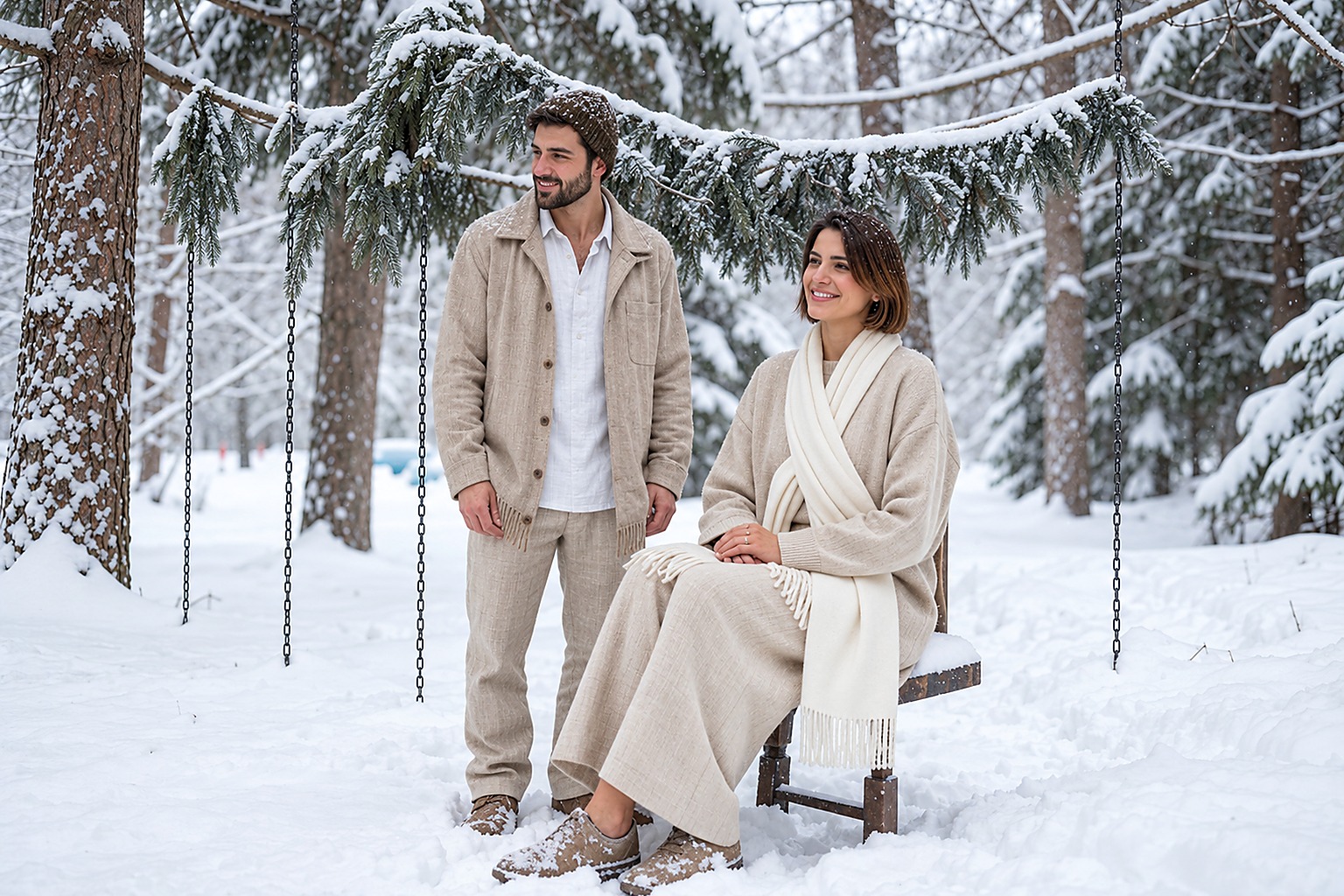

Most people who ask “can you wear linen in winter” expect a no, but the answer is yes. Pick heavier or blended linen in darker colors and layer it: a thermal or knit underneath, a wool coat on top. Linen breathes, so it suits heated offices, but thin, unlayered linen is too cold outdoors.
Can You Wear Linen in Winter? The Short Answer
Yes, you can wear linen in winter if you treat it as a middle layer. A thermal or merino base keeps you warm, the linen handles sweat, and a wool coat traps heat on top, a combo that fits right into this winter’s fashion trends. Thin linen worn alone outdoors on a freezing day will leave you cold, however good it looks.
Linen makes the most sense for people who run hot. Picture a packed subway ride into an office with the heat cranked up: a breathable linen shirt under your coat keeps you comfortable at both ends of that trip.
Does Linen Keep You Warm in Winter?
Linen won’t keep you warm on its own. It’s a cooling fabric by nature, which is why it shines in July. In winter, its job is comfort under warmer layers: it pulls moisture away from your skin and stops that sticky, overheated feeling indoors.
Why Linen Feels Cool
According to Wikipedia’s entry on linen, linen feels cool to the touch because of its higher thermal conductivity, which means it moves heat away from your body quickly. The same source notes linen is very absorbent and dries faster than cotton. Those traits are great on a beach and a lot less fun at a bus stop in a February wind.
Why It Still Works in Cold Weather
Warmth comes from trapped air, and wool is the expert at that. A 2024 systematic review in the Journal of Sleep Research by Li, Halaki and Chow describes wool regulating body temperature by “trapping air and moisture, creating a favourable microclimate between the skin and garment.” Put wool over linen and each fabric does what it’s good at. The wool holds heat outside, and the linen underneath keeps sweat from building up when you walk into a warm store.
What Type of Linen Is Best for Winter?
The best winter linen is heavier, tightly woven, or blended with wool. Leave the gauzy, see-through vacation shirts in the drawer until spring. On product pages and labels, look for words like “heavyweight,” “midweight,” or “linen-wool,” and pick darker shades that read as cold-weather clothing.
Heavyweight Linen
Fabric weight is measured in GSM, which stands for grams per square meter. A higher number means denser, warmer cloth. For a real benchmark, the Alliance for European Flax-Linen & Hemp sourcing platform lists an autumn/winter tailoring fabric of 58% flax-linen and 42% wool at 310 g/m². Use that as a reference point whenever a brand lists the weight.
Linen Blends: Wool and Cotton
Blends fix linen’s two winter weak spots, low warmth and easy wrinkles. Wool adds insulation, and cotton adds softness and a smoother finish. That Alliance fabric, built for the autumn/winter season, mixes 42% wool into the linen. Always check the fabric label, since blend ratios vary from brand to brand.
Linen vs Wool vs Cotton vs Flannel for Winter
| Fabric | How it feels in the cold | Where it fits in a winter outfit | Watch out for | Pair it with |
| Linen | Cool to the touch; breathes and dries fast | Middle layer: shirts, wide-leg trousers, shirt dresses | Turns cold quickly once damp; wrinkles easily | A merino base layer and a wool coat |
| Linen-wool blend | Warmer than pure linen, with fewer wrinkles | Trousers, blazers and tailoring (one autumn/winter fabric is 58% linen, 42% wool at 310 g/m²) | Blend ratios vary, so check the label | A merino rollneck or fine-knit sweater |
| Wool and merino | Warm; traps air close to your body | Base layers, sweaters and coats | Coarser wool can itch on bare skin | Linen shirts and trousers underneath |
| Cotton | Soft and comfortable indoors | Tees and indoor layers on dry days | Feels chilly once it gets damp | A wool sweater on top |
| Flannel | Brushed, cozy surface | Overshirts and casual top layers | Bulky under fitted jackets | Linen-wool trousers and boots |
The quick takeaway: linen works best in the middle of the outfit, with wool doing the warming around it.
How Do You Wear Linen in Winter Without Freezing?
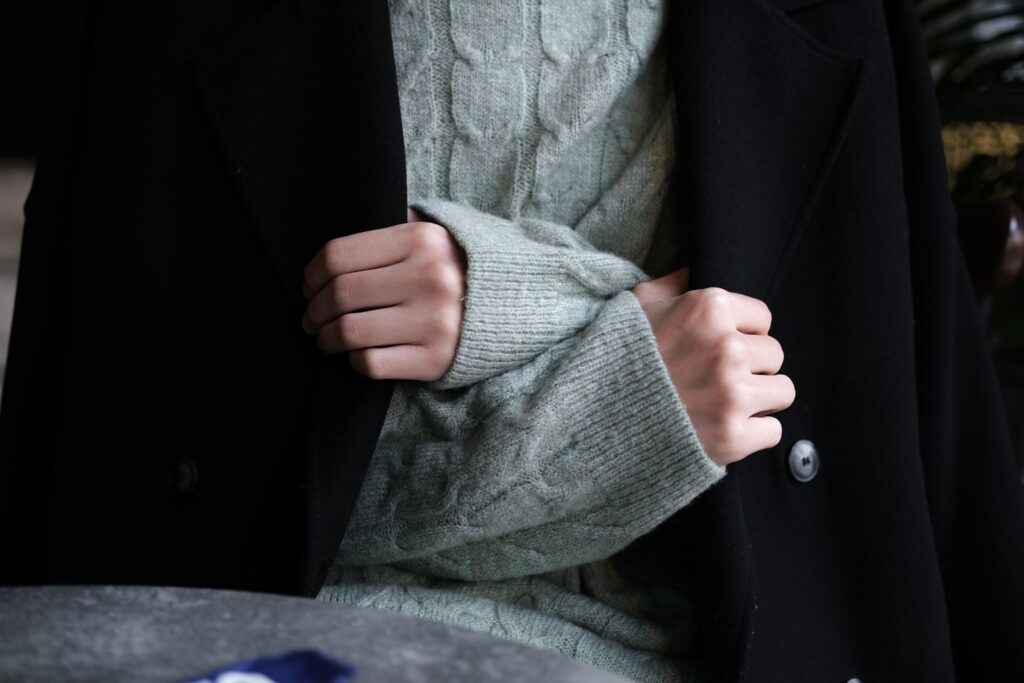
Use what we call the Linen Sandwich: a warm base layer, linen in the middle, and wool or down on top. Each layer has one job. The base holds heat, the linen manages moisture, and the outer layer blocks wind and traps warm air around you.
Base Layer
Start with something warm and dry against your skin, like a merino tee, thermal leggings, or fleece-lined tights. Dry matters most here. The same Journal of Sleep Research review explains that natural fibres have “lower thermal conductivity when dry, but this can increase significantly after moisture absorption.” In plain words, damp fabric pulls heat out of you faster.
Middle Layer: Your Linen Piece
Your linen shirt, wide-leg trousers, or shirt dress goes here. Size up slightly if you plan to wear a thermal underneath, so nothing pulls across your shoulders or thighs. A relaxed fit also leaves a little air between layers, which helps you stay warm.
Outer Layer
Finish with a wool coat, a puffer, or a chunky cardigan on milder days. Add a scarf, wool socks, and closed boots. Those cover your neck and ankles, the two gaps a linen outfit tends to leave open.
Can You Wear Linen in Winter as a Woman? 4 Outfit Formulas
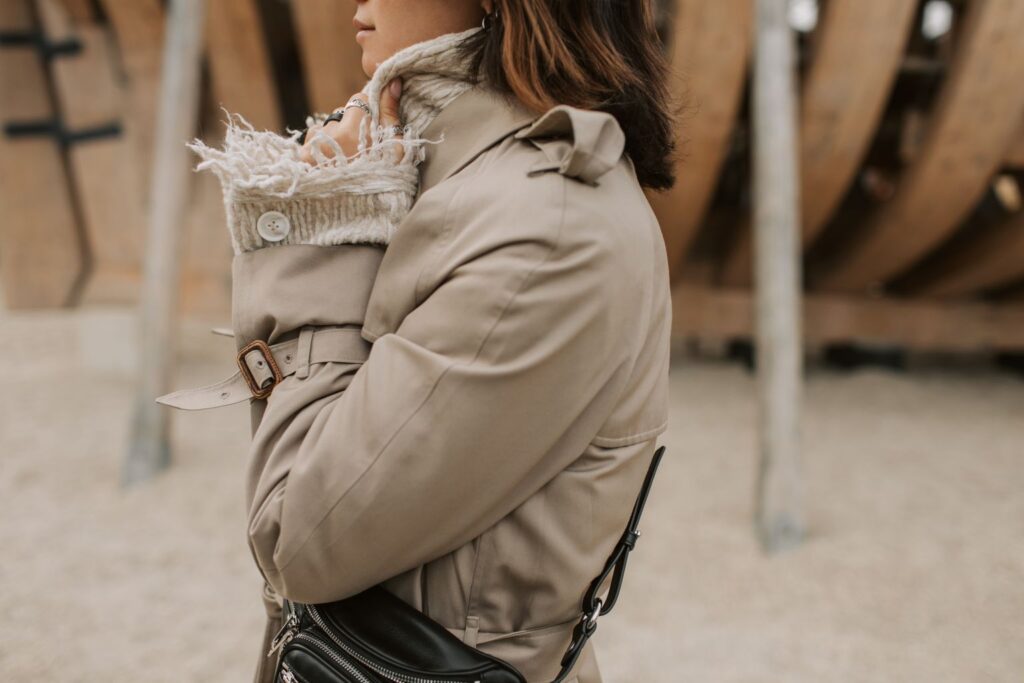
Yes, and women’s linen pieces layer especially well, because dresses and wide trousers leave room for tights and thermals underneath. Each formula below uses one linen piece and builds warmth around it, so you can mix and match with what’s already in your closet.
- The shirt dress. Pieces: linen shirt dress over a thin merino turtleneck, plus fleece-lined tights. Shoes: knee-high boots. Coat: long wool coat. Best for: weekend brunch and casual offices.
- The wide-leg trouser. Pieces: charcoal or olive wide-leg linen trousers, thermal leggings, a fine-knit turtleneck. Shoes: ankle boots. Coat: camel wrap coat. Best for: work and dinners out.
- The cardigan shirt. Pieces: oversized linen shirt, chunky cardigan, dark jeans. Shoes: lug-sole boots or loafers with wool socks. Coat: puffer. Best for: errands and travel days.
- The office blazer. Pieces: linen or linen-wool blazer over a merino knit, wool trousers. Shoes: block-heel boots. Coat: tailored wool overcoat. Best for: business-casual offices.
On a budget, start with formula 3, since a linen shirt you already own plus a cardigan and jeans costs nothing new. Fit matters too: our guide to dressing for your body type shows which trouser and dress cuts flatter your shape.
Can You Wear Linen in Winter as a Man? 4 Outfit Formulas
Yes. For men, the easiest move is treating a linen shirt as the base for knitwear, then adding heavier textures on top. Keep the colors dark and the fabrics heavier, and the outfit reads as proper winter style.
- The sweater layer. Pieces: linen shirt with the collar out over a crewneck sweater, chinos. Shoes: suede chukkas. Coat: wool peacoat. Best for: smart-casual days.
- The texture stack. Pieces: linen-wool trousers, thermal tee, flannel overshirt. Shoes: leather boots. Coat: wool field jacket. Best for: weekends.
- The suede jacket. Pieces: dark linen shirt, dark jeans, and a suede jacket. Shoes: Chelsea boots. Coat: the suede jacket, plus a scarf. Best for: dinners and dates.
- The work blazer. Pieces: linen-wool blazer, merino rollneck, wool trousers. Shoes: Derby shoes. Coat: wool overcoat. Best for: business-casual offices.
Round out these looks with a wool scarf, leather gloves, and a beanie in the same dark tones.
Can You Wear Linen Pants in Winter?
Yes, you can wear linen pants in winter if you pick a heavier or blended pair and layer underneath. Thermal leggings or long johns fit under relaxed linen cuts without adding bulk. Finish with wool socks and boots, because a bare ankle in linen is the quickest way to feel the cold. Charcoal, navy, and olive look more seasonal than white.
What Colors Work Best for Winter Linen?
Dark, earthy colors work best for winter linen: charcoal, navy, olive, burgundy, chocolate brown, and black. They read as cold-weather clothes even when the fabric itself is light. Save crisp white and pastels for spring. Oatmeal and cream still work under a camel or grey wool coat.
When Should You Not Wear Linen in Winter?
Skip linen as your main layer on wet, snowy, or below-freezing days. Damp natural fibres lose their insulation fast, and linen soaks up moisture readily. Linen is also a weak pick for strict formal dress codes and hard outdoor workouts.
- Rain, sleet, or slush: once linen gets wet, the cold comes straight through.
- Deep cold with no layers: a lone linen shirt can’t hold enough heat.
- Strict formal settings: Wikipedia points out that linen’s poor elasticity means it wrinkles easily.
- Heavy outdoor exercise: a merino or technical base layer handles sweat better.
One winter care tip: steam linen or iron it while slightly damp, dry it indoors, and follow the care label.
Is It Appropriate to Wear Linen in the Fall?
Yes, fall is the easiest cold-weather season for linen. Early fall is often mild enough for a linen shirt with a light jacket, and you can add knits as the weeks cool down. Swap white for rust, olive, and brown, add ankle boots, and you’ve got easy fall outfits from pieces you already wear in summer.
Conclusion
Linen earns its place in a winter wardrobe once you stop asking it to do a coat’s job. Remember the Linen Sandwich: a warm base, linen in the middle, wool on top. Women can start with a linen shirt dress, fleece-lined tights, and a long coat. Men can start with a linen shirt under a crewneck sweater. Dressing for the weather you’ll actually face is the idea behind every Fashionvise style guide.
Frequently Asked Questions
Should linen only be worn in summer?
No, linen works in every season once you change the weight, color, and layers. Wear light linen alone in summer and add a jacket in spring and fall. In winter, use heavier or wool-blend linen as a middle layer under a warm coat.
Can you wear linen in 70 degree weather?
Yes. At 70°F, linen is a comfortable choice on its own. A linen shirt or pair of trousers feels cool in the sun, and a light cardigan or jacket covers you if the evening turns chilly. Lighter colors suit this temperature well.
What is the rule of wearing linen?
The main rule is to let linen be relaxed. Accept a few wrinkles, choose an easy fit with room to move, and match the fabric weight and color to the season. In cold months, add the layering rule: warm base, linen middle, wool on top.
What are the downsides of wearing linen?
Linen wrinkles easily, holds little heat on its own, and can feel stiff before a few washes soften it. It also gets cold quickly when damp. Heavier weights, wool blends, and smart layering take care of most of these downsides in cooler months.
Is linen good for winter or summer?
Linen is at its best in summer, where its cool feel and quick drying make hot days easier. It still earns a spot in winter as a middle layer. Heavier linen and linen-wool blends handle cold months best when you wear them under a warm coat.
Can I wear linen pants to work in winter?
Yes, in most business-casual offices. Choose dark, heavier, or wool-blend linen trousers, pair them with a fine-knit sweater or blazer, and wear leather shoes or boots. For strict formal dress codes, wool suit trousers are the safer pick.
Is it fashionable to wear linen in the winter?
Yes. Winter linen looks current when you style it with chunky knits, wool coats, and boots in deep, earthy colors. Mixing those textures on purpose makes the outfit look intentional. Bright white summer linen worn alone is the version that looks out of season.